


When I first became a SAHM, I had lovely dreams of days spent home with my children. We’d play, craft, read, sing and dance, and enjoy each other’s company while gazing lovingly into each other’s eyes. What a beautiful thought. Eventually reality hit a bit differently.
I don’t know about you, but being at home with little ones who have unbridled energy can feel like a cruel form of torture. Don’t get me wrong; I love my children dearly. At the same time, it’s challenging to keep up with climbing energy levels and days can feel long.
Right around the time my second child was one year old, the energy levels and emotions didn’t just double, they grew exponentially. This also happened to be right in the beginning of winter- New England winters are no joke- and we all start feeling cabin fever well before the spring melt comes in late March. Winters are long to say the least. I knew in my heart the answer to saving our sanity. We needed more rhythm in our lives and we needed to get outside.

So, in 2023, our family kicked off the year with the 1000 Hours Outside challenge. That experience was life changing. We’ve always been a family that gets outside, but not in any intentional kind of way. As the challenge unfolded, we swapped more of our time indoors for outdoor time. Over time a shift happened, in which we couldn’t wait to get outside. That’s when our rhythm truly started to blossom.
Sunshine before 9 is now a family mantra. It’s an integral part of our daily rhythm. Post breakfast we are usually headed out the door ready to release energy and catch some rays. After a few months of this rhythm, we began to notice BIG changes: we began to feel better, sleep better, and since then we’ve been happier. These are bold statements, I know. But let’s take a look at the science, shall we?
Early morning sun improves sleep
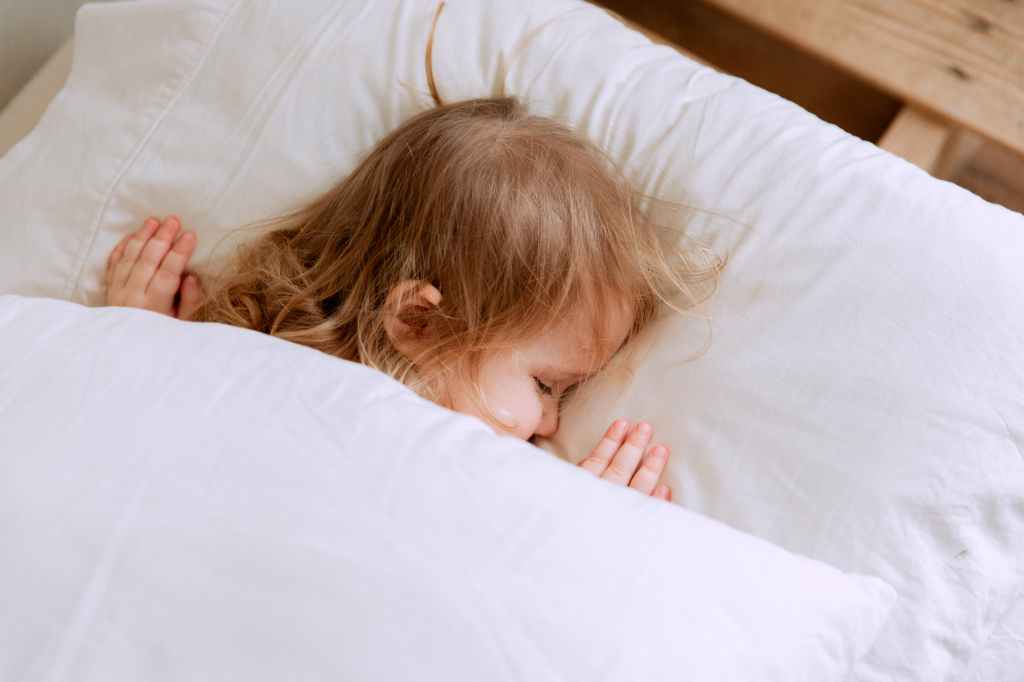
“Get your little one outside and they’ll sleep better at night”. Many mothers have heard this little gem of maternal wisdom. The deeper I get into my parenting journey, the more I realize motherly lore is often true. My kids do fall asleep better and sleep deeply at night when they have had time outside. Being the intensely curious person I am, I wanted to know more about this sunlight for better sleep concept. Sure enough, I found out that sunshine indeed helps humans sleep and here’s how. More importantly, morning sunshine sets our kids up for sleep success.
When our kids get sunshine, their bodies can create vitamin D. Vitamin D is important in the production of melatonin, the sleep hormone responsible for helping us fall asleep. You can think of melatonin as a molecule-type “key” that unlocks specific “locks” within our brain opening doors to relaxation needed for sleep. Pretty neat, right?
Morning sunshine hits differently than sunshine in other periods of the day. Literally. The angle of morning sunlight includes more of the wavelengths Not by directly looking into the sun. Don’t do that. But getting outside and letting the sunlight, even by reflection off the ground will help to stimulate bodies to naturally move through periods of wakefulness and sleep. Our circadian rhythms also regulate other biological processes such as hunger and our body temperature. It resets circadian rhythm so it can flow harmoniously with the rising and setting sun. Since I can’t help myself here and love sharing the science piece, let me tell you why. This happens for two reasons: (1) when light enters our eyes, specialized cells in our eyes signal to our brains that melatonin production should stop. (2) It also cues bodies to begin melatonin production 14 hours later.
Sunshine before 9 aids in alertness and helps our children learn
In a similar vein, early morning sun can increase another hormone whose benefits are oft overlooked and that is cortisol. Typically we think about cortisol as the stress hormone, and indeed, it is the hormone responsible for such feelings. However, it is also a useful hormone in that it improves wakefulness. It has an inverse relationship with melatonin. When cortisol is high, melatonin is low. Early morning sun leads to early release of cortisol (read: not necessarily stress).
Morning sunshine leads to increased levels of happiness.
Morning sunshine can make our kids happier? It’s a bold statement, I know. Yet it’s true. Vitamin D can lead to a happier existence. Period. Winters are hard for many people with SAD for a reason. It’s not the snow, the ice, or the cold temperatures. It’s the lack of sunshine. I just went through a bout of seasonal depression myself and I can’t tell you how much happier I’ve been since the sun has been shining. It’s miraculous.
Vitamin D helps the body release another important hormone, serotonin. Serotonin has been dubbed one of the “feel-good hormones” and one of its primary jobs is to regulate mood and is associated with happiness, satisfaction, and optimism. More vitamin D, more serotonin, more happiness. We can all get behind that, can’t we?

Most people find going outdoors energizing and for good reason. We already know that melatonin production slows with morning sunlight and now also that it can increase positive emotions. These two effects carry through the day for our kids. When children get morning sunlight they are happier throughout the day. In addition to that, my kids are much better able to regulate their emotions when they get that morning sun. I’ve heard similar stories from many more mothers. Morning sunshine is such a simple way to support our children’s happiness levels.
Going outdoors helps us feel better
When it comes to my homeschooling ideology, I’m an eclectic kind of lass. Our homeschool design is drawn from a variety of sources, one of which is Waldorf. There’s a thoughtful approach within their philosophy, grounded in research, that alternates periods of concentration and expansion. Basically this means flowing through cycles of focused work or rest (inhale) and free play or spontaneity (exhale). When we see kids playing in their free time, they are actually doing very important work. These expansion periods are essential components to learning because individuals have space to process and incorporate new learning into their thinking by solidifying memories and make connections within their schema or way in which they interpret the world. An example in which you might see this happening is when children incorporate their new ideas into pretend play.
Expansion periods are easy to achieve simply by getting outside. As an added bonus, outdoor play keeps messes inside the house to a minimum. I’m cool with that. While periods of expansion can certainly happen within the confines of a building, the outdoors offers more scope for the imagination. There is literally more space and a changing environment which heightens interest and intrigue and stimulates the senses; observing a flower, feeling the breeze, or seeing a bird swoop down to catch lunch allow the brain to be relatively idle in a beautiful, peaceful kind of way. In addition to offering the gift of idleness, the outdoors offers an invitation for physical activity, increasing blood flow and oxygen to the brain, and can stimulate more neural growth and development. Space for imagination and physical activity helps kids learn and develop in tune with their natural rhythms and developmental needs.
Are sunny windows enough?
It’s best to get outside for morning sunlight. Since windows and windshields filter out many of the relevant wavelengths of light, it’s not enough to get your 15 minutes inside of a car on a commute or sitting in front of a sunny window. This sunlight is still helpful in many ways, but
If you’re not into the science bit I at least want to leave you with this invaluable piece of information: morning sunshine helps our kids feel more awake during the day and sleep better at night.
Make it work for you
Ideally we get sunshine in our eyes as soon as we wake, but this is not ideal when we have hungry sleepy little ones who are understandably reluctant to get right outside. I get that. Sometimes the weather is simply not safe. Below freezing temperatures and extremely windy days can pose risks. Don’t force it if it’s not safe. Real life may also be a hindering circumstance. Perhaps you have a newborn and can’t get outside as much as you’d like. Real life happens.
The good news is that all you need is a solid 15 minutes in the morning sunshine to reap the benefits mentioned above. If you can’t get it outdoors, a sunny window is fine. It does take 40 times more sunlight to reset the circadian rhythm through a window, but hey, we make do when we need to. Something is better than nothing here and so take those days to play in the sunniest part of your house. In the winter we tend to “follow the sunlight” playing in the rooms with the most sun throughout the day. If you have to be somewhere in the morning, build in 15 minutes to play outside before getting in the car. Heck, we’ve played in the driveway when we’ve had to be out of the house before 9 just to get in that sweet sunshine! If you live close enough to your destination, try to walk instead. Build in morning time at a park if you have an outing in town. These strategies are seemingly small, but have tremendous impact on your little one’s entire day, and so they are totally worth it.
Final thoughts
So there you have it, a few of the MANY reasons we strive to be outdoors early on in the day. There are a plethora of other reasons we like to get outside, which I’d love to try to stuff into a single post, but that’s for another day. If you’re on the fence about getting outside in the morning with your little ones, give it a week. I promise you the reward for the effort it takes is beautiful beyond belief. You all will feel better. You all will sleep better. You all will be happier.



 thiswildandpreciouslife.com
Leave a comment