
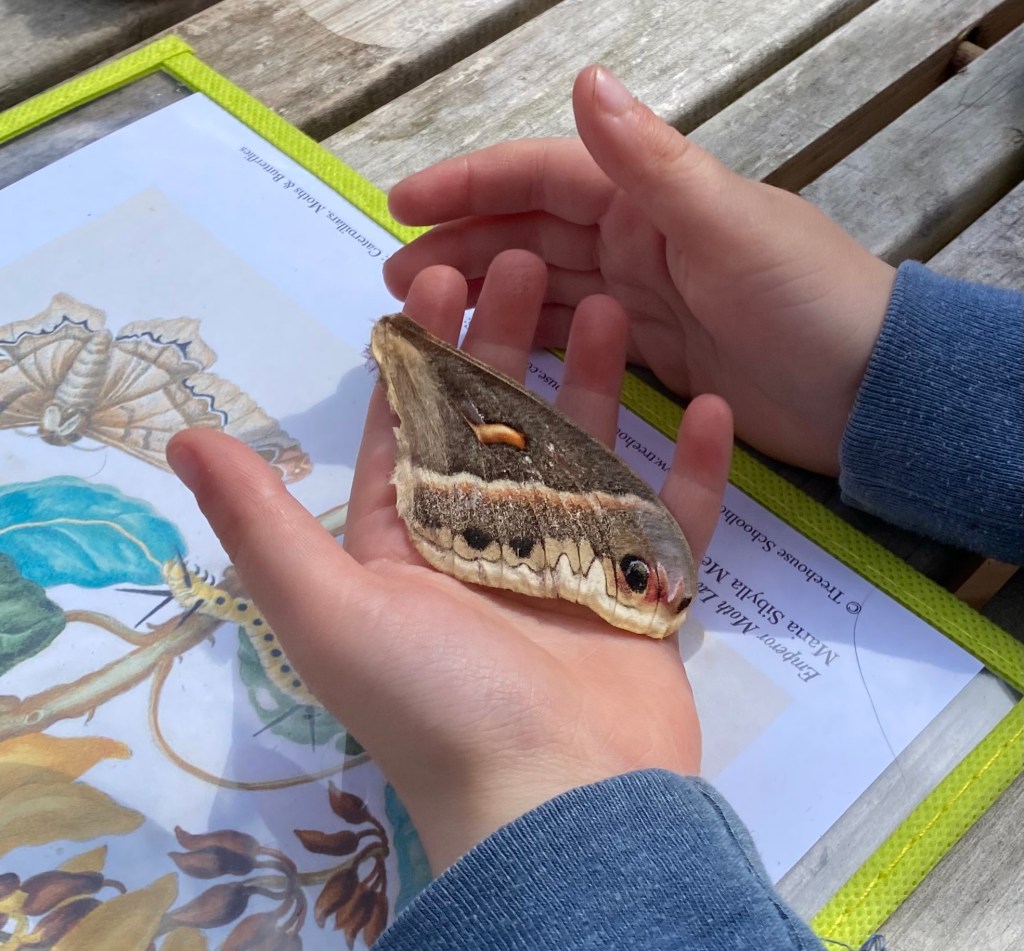
May is here and so are the butterflies! Days are sunny, flowers are blooming, and insects are making their way back on the scene including one of kids favorite insects: butterflies! Early May is a perfect time to learn about butterflies.
Butterflies are a fun topic for many children and for good reason. Metamorphosis is a beautiful and awe-inspiring life cycle that feels like magic. Artistic patterns adorn their wings. Migration patterns are astonishing. They are fun to watch as they flit about from flower to flower. It’s no wonder kids and adults alike take a special interest in butterflies.
Preschool for us is largely play-based, with a weekly nature study to practice skills and to learn about various topics. Seasonal nature-based themes are perfect for little ones because the natural sciences are tangible, making it easy for kids to observe and explore in a hands-on fashion.
Mixed in with abundant free play and exploration, I like to sprinkle in various activities, books, independent play opportunities, and shelf work that aligns with our nature study so the kids can explore it from a variety of perspectives and work on different skills through the focus topic. Read along to see what we read, explored, tested, observed, and where we visited.
Butterfly Book Nook
It’s an understatement to say books are important in our home education. Books are the cornerstone of our educational philosophy and we spend most of our indoor time reading together. Ever since my first was a day old, we’ve read books every. single. day.
Butterfly house is a story about a girl who saves a caterpillar, and alongside her grandfather makes a home for it’s metamorphosis. This formative experience grows into a lifelong love for butterflies that surround her home every spring. The pictures are artfully done and realistic. My favorite part of the story: it describes in great detail a method for creating a butterfly house that little ones can try out. For those more Type-A personalities, it has detailed instructions for raising butterflies on the last page. It’s a sweet story and a lovely take on an instruction manual for raising butterflies.
How Does a Caterpillar Change? is short and simple, this book is okay for engaging the smallest pre-readers. While it’s not much of a story, it does a good job simplifying a butterfly life cycle and is sturdy enough for little hands to manipulate. Plus, it is a fun follow up to the popular Hungry, Hungry Caterpillar, which I’ll be sure to grab next time.
The Butterfly Alphabet by Scholastic was such a gem to find on our library shelf. It’s brilliant. In this book, you’ll find the picture of a butterfly or a moth on one page with beautifully written lines about butterflies (one of the words will begin with the highlighted letter), and an image of the letter hidden in a butterfly wing pattern on the facing page. The author’s story is highlighted and we enjoyed reading about how he turned this delightful search to fun letters in butterfly wings into a passion and a book.
Butterflies by Kingfisher readers offers a close-up look at butterflies interspersed with interesting facts. While we’ve read it together, I mainly leave it on the shelf for perusing. The kids mostly enjoy looking at the pictures and I’m cool with it.
Ranger Rick for May 2023 highlighted butterflies up close, and so I picked one of these up at the library. Kids magazines are often overlooked as a great book nook option, but they can be such an amazing resource! My kids love flipping through the pages.
Observations
Fun fact about me: I have a specimens collection. When I find nicely preserved specimens, such as exoskeletons and butterfly wings, I keep them. It’s something I’ve always done and I’ve amassed quite a collection of beautifully preserved butterfly wings. You can purchase real dried butterflies if you’re not into collecting dead butterfly bodies from your yard.
This week, I pulled out my beloved collection “for the kids”. They were fascinated by their fragility and weight, and were able to observe eyes and legs up close with a magnifying glass. This was especially cool because my oldest had asked if butterflies have legs, so he was able to answer his own question through this experience.
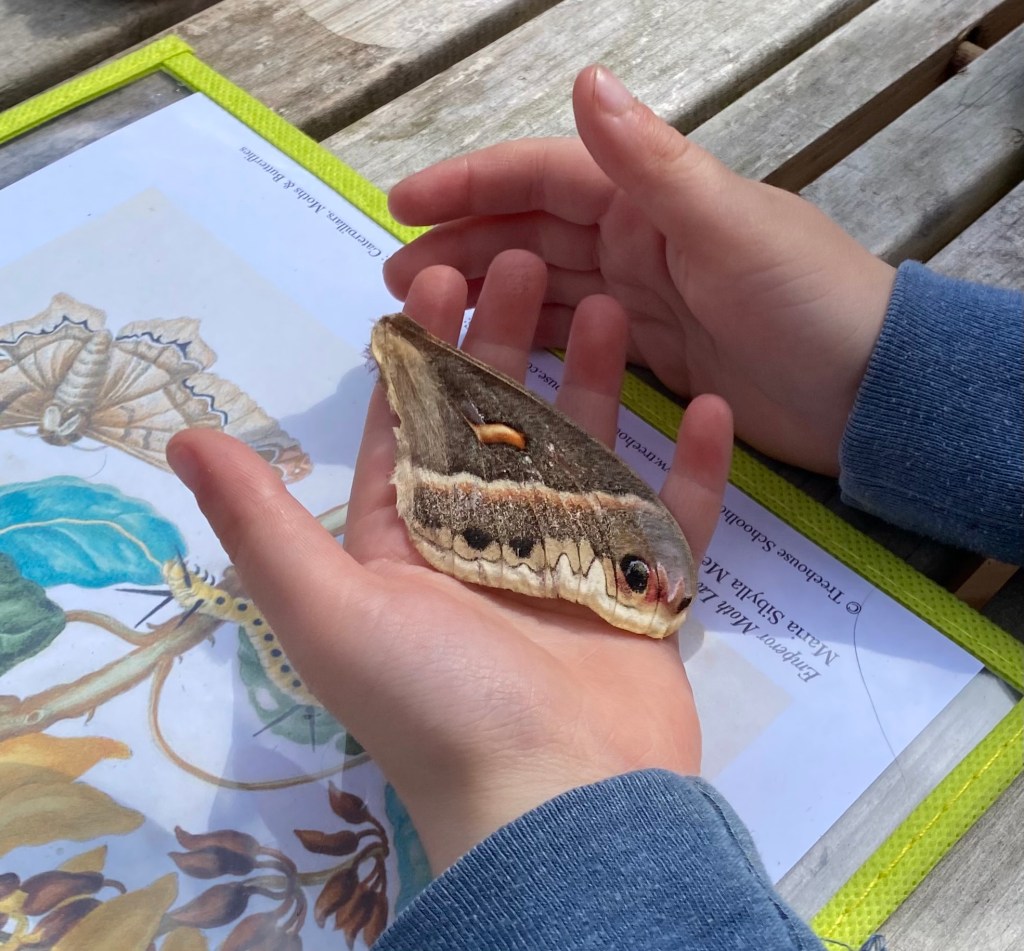
Not to flex or anything, but I chose the perfect week to study butterflies because we saw our first butterfly in the yard and many other caterpillars on our nature walks. So many observations we made in nature, observing butterflies in our local habitat. My job? Sit back, and marvel in the splendor alongside my kids.
Raising Butterflies is another obvious choice here and we are definitely partaking. We purchased caterpillars during our field trip to a butterfly conservatory. It’s been an exciting experience watching the caterpillars grow and develop. Unsurprisingly, the chrysalis phase has been the kids’ favorite phase. Metamorphosis is a fascinating phenomenon and there is nothing quite like observing the cycle.
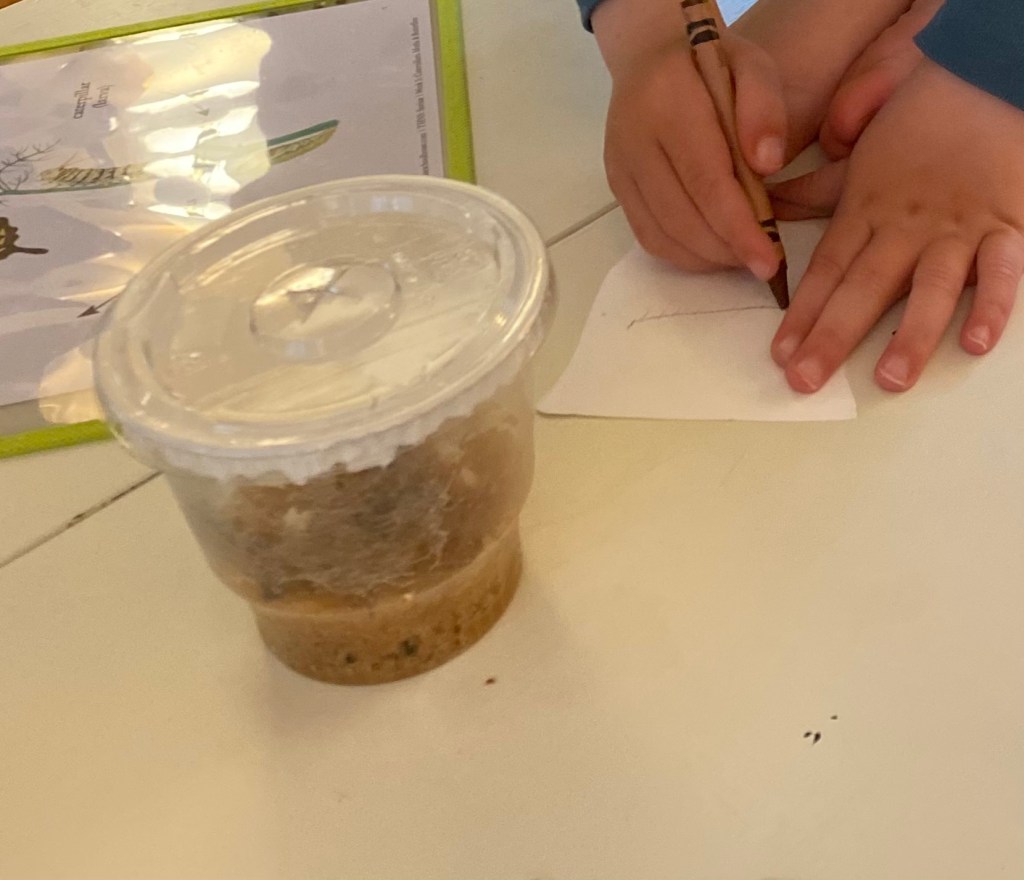
We check in on our butterflies each morning. Early science learning is very much about asking questions and making observations and this activity fits the bill so well. Kids are naturally very curious about metamorphosis, and the observing it is so shocking that the observations flow like water. I cut out silhouettes of the observation cup so we could draw our observations and reflect at the end of the experience.
You could read the aforementioned Butterfly House alongside the activity as we did if you’d like to build your own house and find caterpillars in your yard. We opted to purchase caterpillars and get a small butterfly house from the conservatory to speed up the process. Next year, we’ll definitely be taking that to the next level and making our own.
Shelf Work
Montessori philosophy has a seat at our homeschool table, and so I often put together shelf work for the kids for their choosing during free play. Here are a couple butterfly-themed options from our shelves this week.
The Very Hungry Caterpillar Puzzle This 42 piece puzzle is well loved by my preschooler. While 42 pieces may feel like a lot for a preschooler, the various colors of the fruits, the caterpillar, as well as the stand out multi-colored polka dots, make it easy enough to put together without it being overly challenging. Of course, the book, The Very Hungry Caterpillar, makes a nice accompaniment to the puzzle.
Butterflies Magic Painting Book Dip a brush into water and brush it across black patterns and lines within each shape to see the paint colors appear.

The book includes a built in flap to place under the page you work on as a means to stop the paint from seeping onto the page below. While that worked well for my preschooler, I found it helpful to put out single pages in our art area so the work was accessible for my toddler as well. I like to place these on our art shelf near the paint brushes and paint water cups for independent use. Tip: let your kids dip their fingers in water and finger paint for a better sensory experience. The drawings were based on real butterfly wing patterns, which I appreciated. It was a nice low key way to discuss the variety in butterfly wing design, which was a great precursor to our weekly art activity.
Art Activity

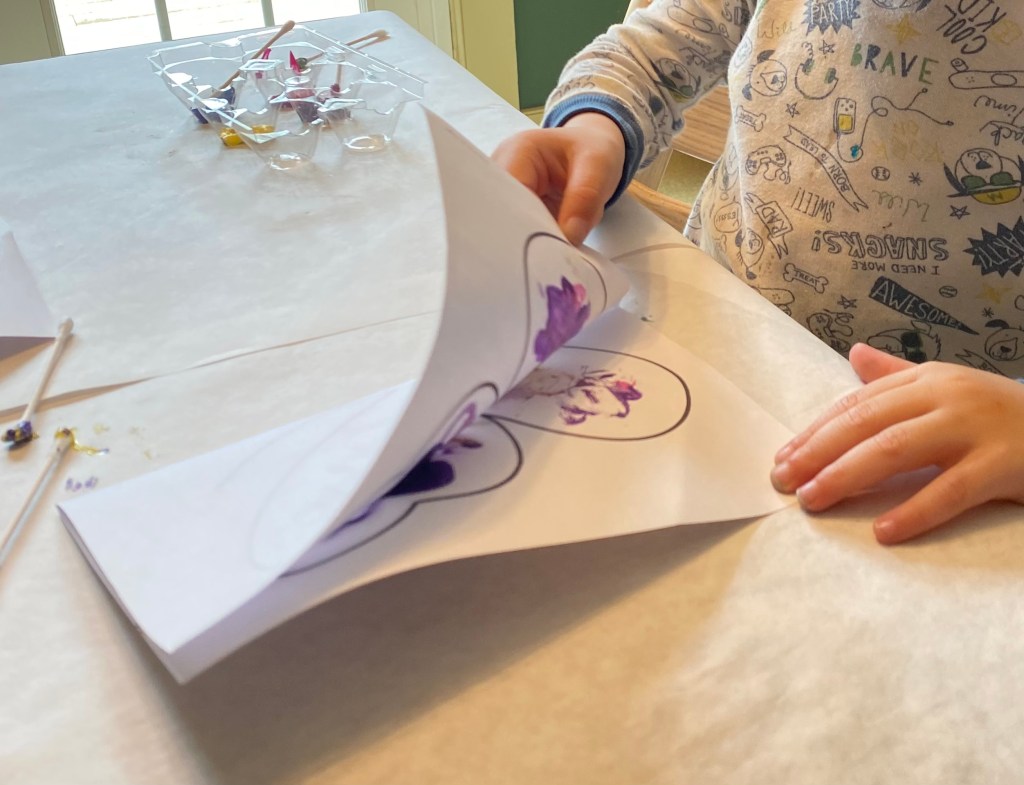
Butterfly Symmetry Art We really enjoyed exploring symmetry through butterfly wings with this activity from Simply Full of Delight. Her printables made quick work of preparing the activity and all I needed to gather was paint and q-tips. My oldest is a sensory-seeker through and through, and so he really enjoyed smushing the paint between the folded halves of paper. It’s easy enough to include toddlers in the activity. Our little lady enjoyed painting and counting dots on her butterfly wings.
Music and Theatre
Since we live in a black hole and getting to amenities takes time, I like to have podcasts available for drives. Stories Podcast had an episode, Chasing Butterflies, that I put on in the car throughout the week. It is a sweet story about patience through the eyes of a little girl who very badly wants to catch a butterfly. Stories podcasts have great stories for kids that are upbeat and exciting, while also having a nice underlying moral message. After we listen, we discuss the story, talk about favorite parts, or unpack the concepts and messages. By that time we’ve arrived at our destination, our minds full and bodies ready to move. A quick podcast search for “butterfly stories” landed me here, and so you could do this with any topic you’d like.
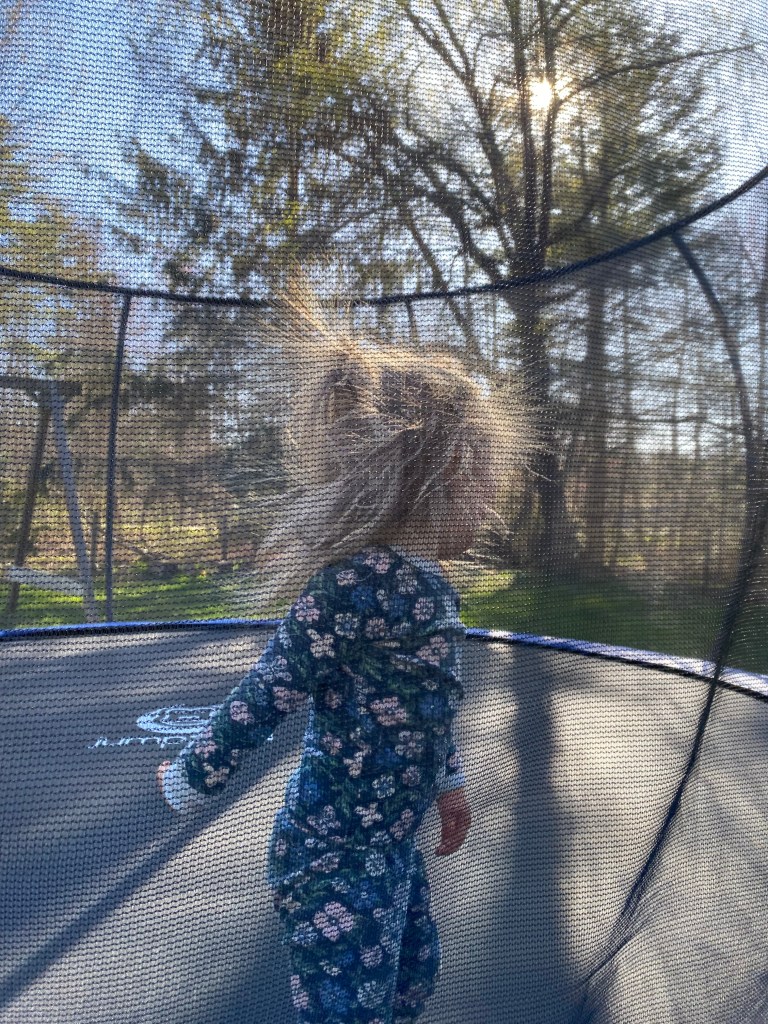
The Rolly Polly Caterpillar hand rhyme from Treehouse Schoolhouse is how we started each morning. This evolved into us acting out the poem on the trampoline. The trampoline works well mainly because it’s easier for me to roll around on the trampoline than it is on the ground in my ripe old age! My preschooler has this rhyme down and just this morning taught it to my husband in an impromptu tear jerking play.
Magic Wings Butterfly Conservatory
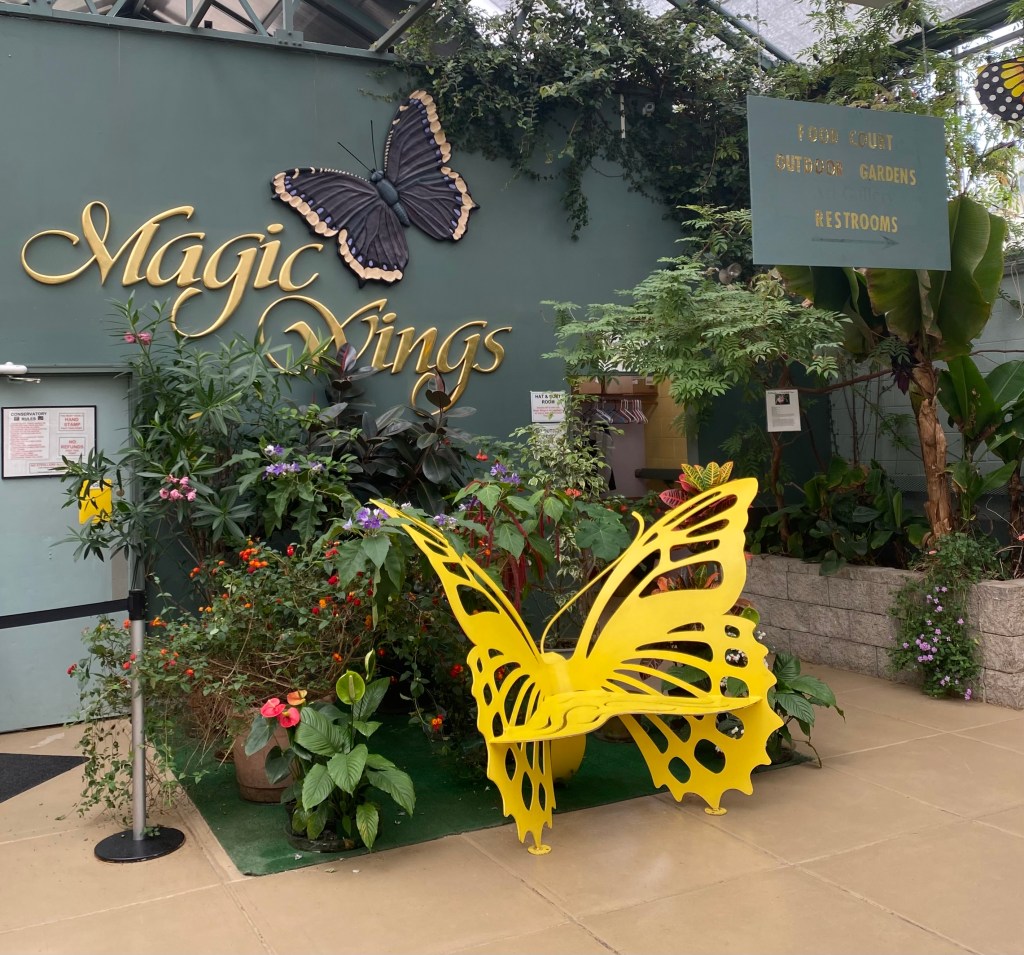
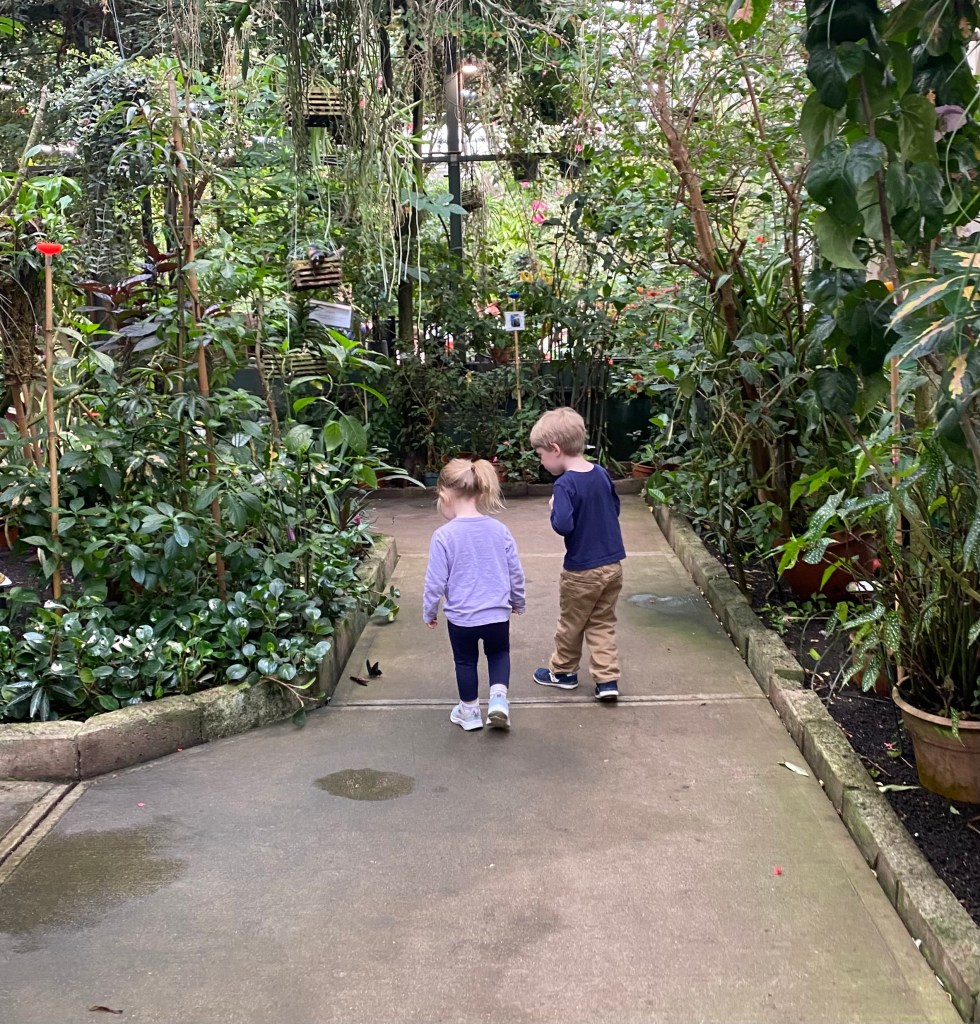
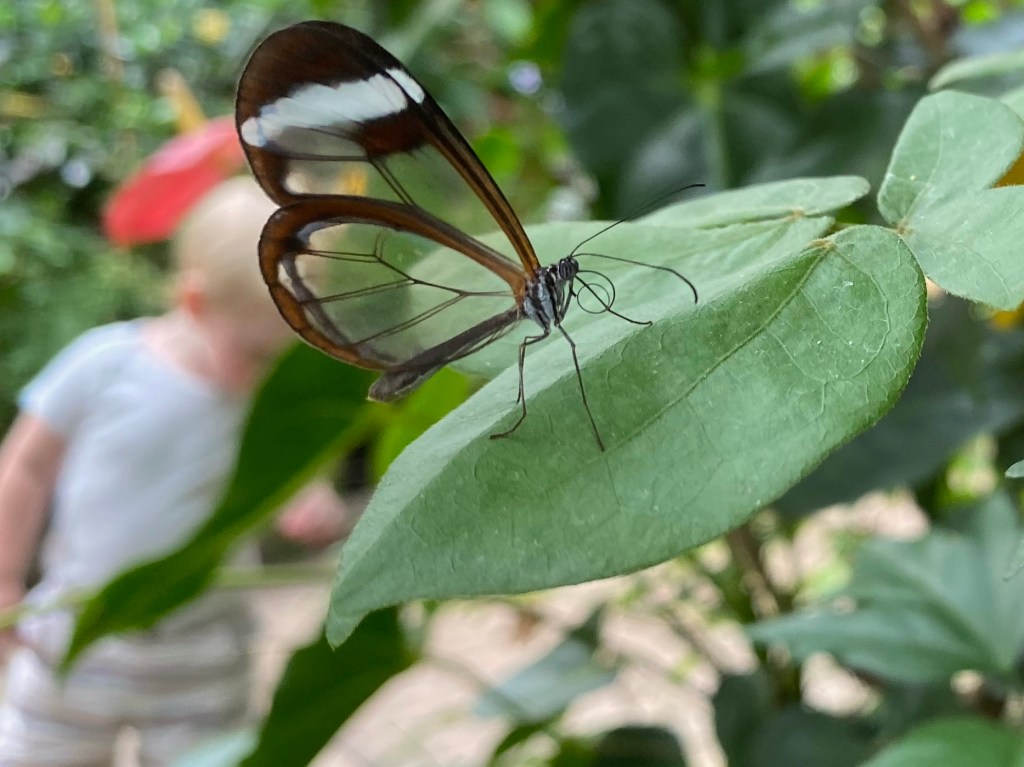
When I can, I try to work a field trip into our week or through a fun family trip over the weekend. It just so happens that we live an hour from a beautiful butterfly conservatory, so we decided to take advantage. Tip: Check your local library for tickets to places such as these. Our trip to the conservatory cost only $10. We brought along the kids’ question list, and they answered a couple of their questions during the experience. I so love when a project or a trip brings a concept full circle.
Final Thoughts
No matter how you choose to organize your homeschool weeks- themes, standards, projects, whatever- including butterflies in your studies is a sure fire interesting topic for little learners. Read great books. Find art to inspect their beauty. Find fun activities to delve into their beautiful life cycles. And definitely get outside, observe, and enjoy. It’s my hope that some of these ideas spark an idea for you in your own adventures studying butterflies.


 thiswildandpreciouslife.com
Leave a comment