
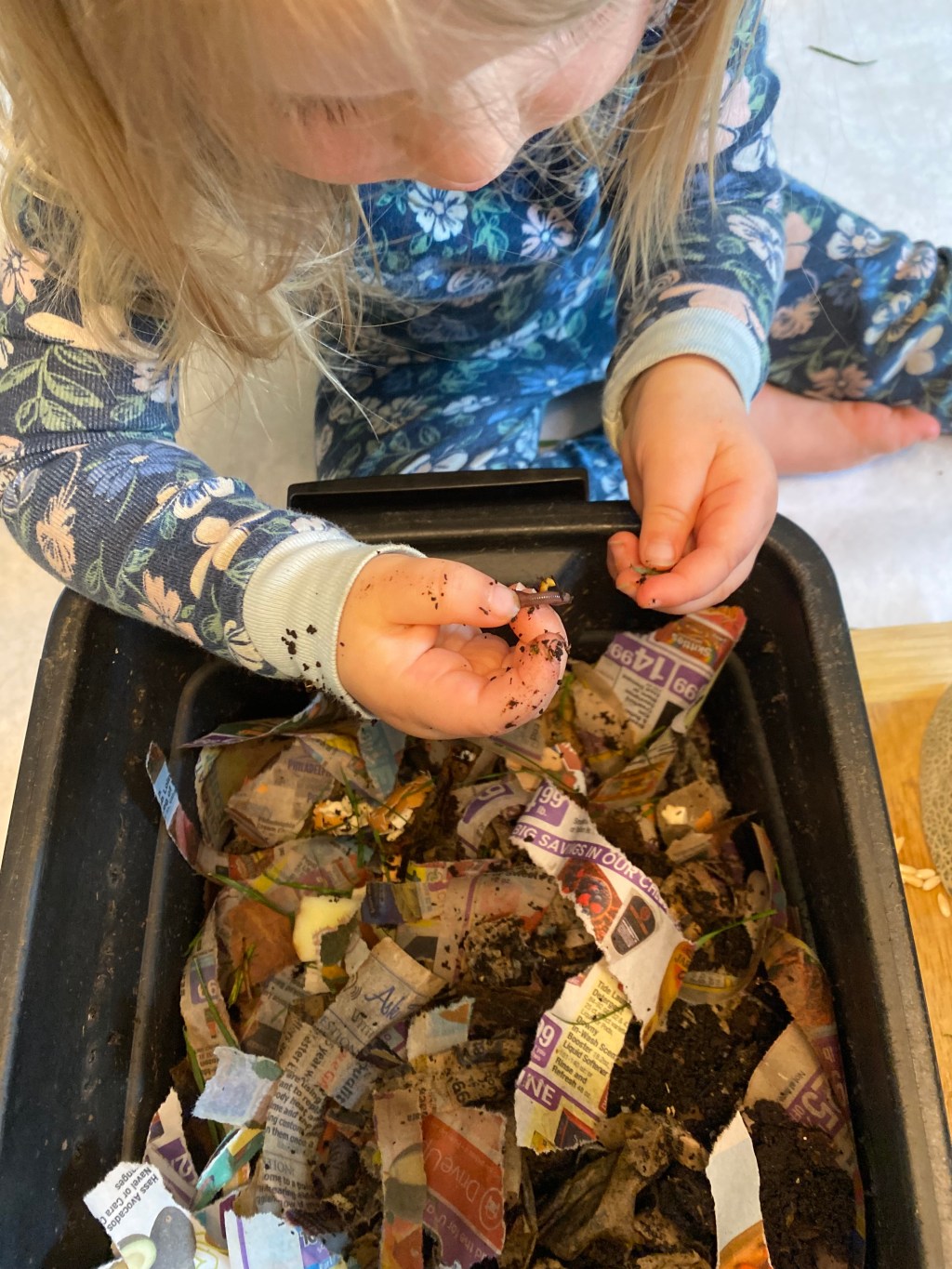
Kids love worms. Well, most kids love worms. My two definitely do. With gardening in full swing, we’ve been finding copious earthworms in the garden soil. Since both kids enjoy them so much, but I’d rather the worms stay in our garden, I decided to try using a vermicomposting bin with the littles. Vermicomposting is a process that uses earthworms and other microorganisms to break down organic matter into a rich soil amendment. Basically, you keep some worms as pets and care for their bin while creating rich nutrient dense soil known in our house as black gold.
The Amazing Benefits of Vermicomposting for Kids
I can see why many people might be put off about keeping a worm bin, but let me assure you it has many benefits.
Maintaining a worm bin may initially seem daunting, but the advantages it offers far outweigh any concerns. The process of composting with worms, also known as vermicomposting, can significantly reduce the amount of organic waste that ends up in landfills. By utilizing worms to break down organic matter, you not only divert waste from landfills but also create nutrient-rich compost that can be used to enhance the fertility of soil. Additionally, vermicomposting is an environmentally friendly practice that aligns with sustainable living. The presence of worms in the bin promotes the breakdown of organic materials and aids in the creation of valuable compost for gardening and agricultural purposes. Overall, despite initial hesitations, the numerous benefits of maintaining a worm bin make it a worthwhile and eco-conscious endeavor.
Environmental Sustainability and Stewardship Vermicomposting is a fantastic way to teach children about environmental sustainability and the natural cycle of decomposition. By involving kids in vermicomposting, they can gain hands-on experience in taking care of the environment while learning valuable lessons about responsibility and the interconnectedness of living organisms.
Interactions Between Living Things and Their Environment Through this process, kids can understand the significance of reducing waste and utilizing resources efficiently, laying the foundation for environmentally conscious behavior in the future. Furthermore, vermicomposting provides an opportunity for children to witness the remarkable work of earthworms in breaking down organic materials into nutrient-rich compost. Overall it’s a great learning journey that fosters a greater appreciation for the vital role of these tiny creatures in sustaining life on our planet.
Sharpens Observational Skills and Teaches About Animal Behavior I’ve been pleasantly surprised with these fascinating creatures and how they offer a unique opportunity for children to learn about the natural world. Since we started keeping worms, the kids have commented on their behavior, their movement patterns, body structure, behavior, and unique adaptations to their environment, all of which I believe are valuable insights and an excellent opportunity to practice observational skills.
Develop A Sense of Responsibility and Ownership Over a Project With the hands-on nature of the worm bin, I’ve also noticed the children develop a sense of responsibility and empathy towards living organisms. While I make sure we check on the worms every few days, I’ve not needed to offer reminders as the kids remember and ask with excitement to check on our worms! They practice “gentle hands” with the worms, cradling them tenderly in their cupped hands and speak so softly to the worms.
Piques Curiosity As they care for worms, children can witness firsthand the interactions between these fascinating creatures and their environment, sparking their curiosity and nurturing a sense of wonder about the world around them.
Opens The Door to Asking Good Questions Caring for tiny creatures presents so many opportunities to ask good questions. Do they like the soil wet? What do they eat? Why do they entangle and stay in clumps?
What You Need to Start Your Vermicomposting Bin
Storage Container– Get yourself a storage container with a tight fitting lid made of dark plastic. We went with a smaller 10 gallon tub like this one. Worms prefer darkness, and so a clear bin would result in unhappy worms unless you decide to cover the bin with a dark material.
Red Wigglers– These worms are a type of red earthworm that ingest organic waste quickly and so they are great for vermicomposting. You can hunt for these in the soil yourself to save some money, or you could even order them from your local Walmart or fish and tackle location.
Source of organic materials- Keep your food scraps and waste to feed the worms. A little goes a long way.
Spray bottle– It’s important to keep the soil moist with a little misting with each feed. We use this spray bottle because it’s easy for kids to use and is inexpensive.
Soil- To get started, you’ll need some soil for the worms. It can be compost or whatever garden soil you can on hand or can find at the local nursery.
Shredded paper or cardboard- Adding shredded paper or cardboard to your bin inoculates the paper and the paper serves as a way to keep the soil moist and comfortable for the worms.
Drill with a large bit- You’ll need to drill holes in the bin to ensure proper ventilation and oxygenation inside the bin for the worms. If you don’t own a drill, some libraries now have tools available to borrow, or call your friendly local handy man and ask for a favor.
Creating a Vermicomposting Bin
There are plenty of vermicomposting videos to show you how to get your bin set up, so check out videos and read tutorials. I thought this tutorial fit the bill.
What Do Worms Eat Sorting Activity
We started our vermicomposting adventure with some close observation. We discussed what we saw and asked questions. As is certain to happen, questions were asked. “What do they eat?” popped up and, “viola” we were ready for our activity! So we followed up with a research and sorting activity to discover the fine art of feeding our wriggly friends.
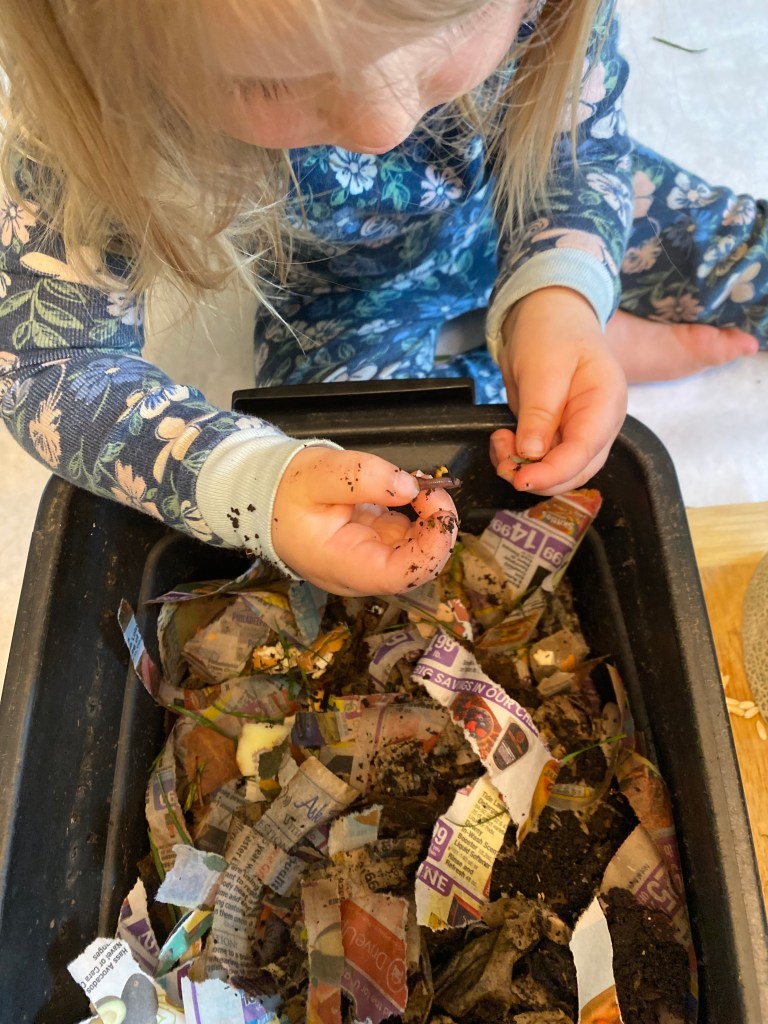
As always, we aim to find a complimentary book or other read to enhance our learning experiences, and so I set out to find books.
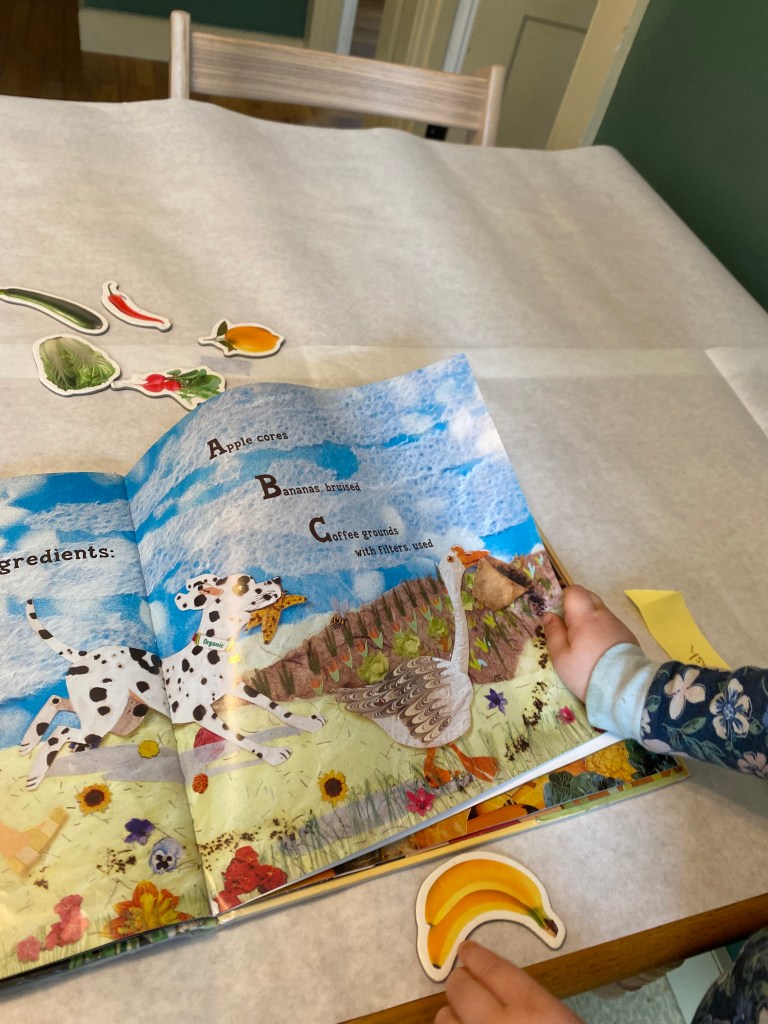
Compost Stew: An A to Z Recipe for Earth is a great resource for kids to discover what they might be able to add to their worm bin. It’s an abecedarius, so the first letter of each composting ingredient follows the letters of the alphabet. This has been one of my favorite book categories because of the added value for my toddler and preschooler to interact with letters. The pictures are artsy. The cadence is fun. All in all it’s a great book.

Worms Eat My Garbage is a book I mainly picked up for myself to learn about the process. However, one page includes pictures of what to feed worms, and so we used that as a resource as well. Many texts can be used as resources, so don’t be afraid to look in places other than the children’s section!
It was important to give them time to explore the books, just as we explored the worms, rather than rushing on to the next part of the activity. As we read, we discussed what types of foods/scraps we have in our home that our worms might be interested in eating. They liked the book and asked to read it again. I happily obliged.
From there I pulled food magnets off the fridge. We use these occasionally when we make a family meal plan and this seemed a great way to make connections with our reading. They work great because we can stick the paper to the refrigerator using the magnets for future reference.

The kids eventually asked if they could pick grass from the yard to add to our sorting chart, so they took off and picked grass for the worms. My oldest asked if he could use our paint spray bottle to mist the worms, and so adding paint to the “No” list was a gentle way to turn down that idea.
Once we sorted items, we went in the refrigerator and got to work finding items to feed the worms. Now when we feed the worms, we can take a look at our chart and can cross-reference with what we have on hand. It’s a meaningful tool they created on their own so they find such value in the chart.
Final Thoughts and What’s Next
Now that we have our vermicomposting bin underway, I have several ideas brewing for how I’d like to incorporate the bin in our learning and in our garden.
- weigh and graph the weight of food scraps or the soil
- count and record the worms over time
- learn about worm life cycles
- interrelationships among living things
- make compost tea and discuss plants needs
- set up an experiment with plants and different types of soil including vermicompost soil
No matter how you choose to use your vermicompost bin with kids whether it’s for good ‘ol observation or a spark for epic learning adventures, a vermicomposting bin is an excellent medium for little ones to learn about environmental stewardship, living things, and the environment. It’s a win win if you decide to put your black gold to work. This sorting activity is a great way to start your journey in becoming a worm whisperer. I’m very excited to use our bin as a springboard for learning, and if you have a spark ignited in you to start a worm bin journey of your own, I wish you great luck. Stay tuned for more wiggly worm ideas!


 thiswildandpreciouslife.com
Leave a comment