
Preparing meals with our youngest family members is one of the easiest ways we can connect daily with our families. We do have to eat, after all. However, it sure isn’t easy at first. It takes time, patience, and intentionality to acclimate to culinary adventures with little ones in tow. There are obstacles we as prepared adults need to navigate. Below you’ll find solutions that have worked well for our family, including how to adjust expectations to reflect the reality of the situation and how to adjust the environment to reflect children’s needs. From here, you will be better equipped to provide these incredibly powerful experiences while also (mostly) maintaining your sanity and peace.
Change begins with us, as the prepared adult.
If you like the idea of preparing meals with your children, it may require tweaking your mindset, to avoid unnecessary friction. and also to the environment to make it more child-friendly. Firstly there are the mental hurdles we as the adults and guides need to overcome. Secondly, finding a balance between ease and work so you can find the time enjoyable is key to staying power. Today, I’d like to share what I needed to personally adjust for myself, and also what needed adjusting in our physical space to make the journey enjoyable for all.The
One of my highest priorities in our homeschool journey is to invite my children into everyday responsibilities, helping them to grow the life skills they need to be self-sufficient adults.
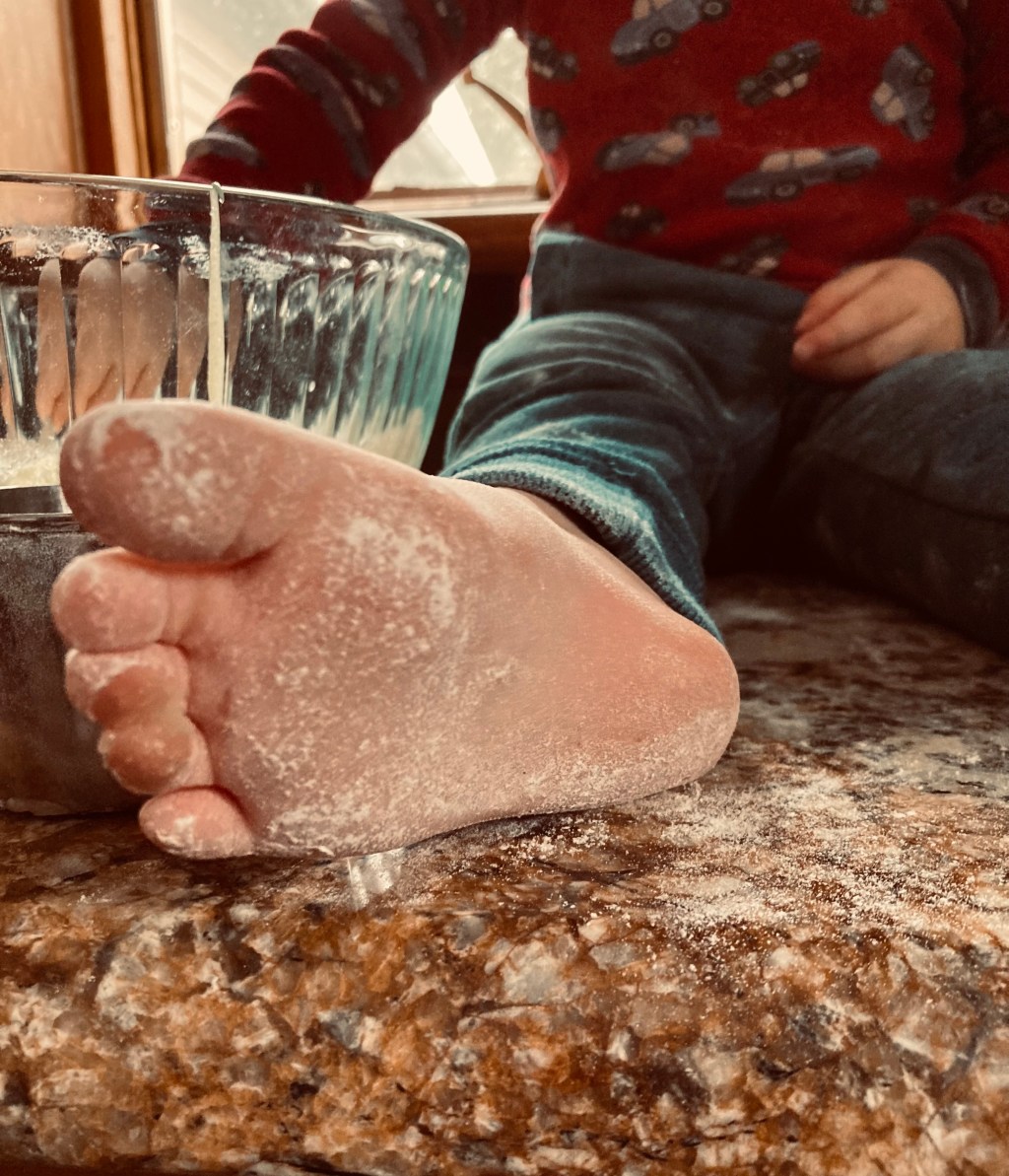
Children are naturally curious about adult work from the laundry to grocery shopping because for them, these chores can be a form of play. The word “chore” gets a bad rap these days. We often use the word chore in a negative light to describe a task as unpleasant. However, this is not the case for young children. They see household tasks with fresh eyes, and naturally want to learn and explore. I feel it can be easy for us as adults to feel the need to encourage children to play rather than work alongside us. However, inviting my children along to tend to household tasks has shown me that they also find chores meaningful, and these moments lends themselves to playful experiences we can share. In fact, some of the most powerful memories I have with my children involve a flour dusted foot, or two.
Baking bread can be a form of play. While it has a practical purpose, we bake bread in our home for more than nutritional benefit. It’s fun to mix ingredients, to knead and to roll out dough. It’s fun to draw shapes in the dusted flour surface. It’s playful to work with your hands alongside someone who is doing the same.
Mindset Shift #1: Children are capable. Period. We aren’t giving our children due credit when we assume preparing a meal is solely adult work and responsibilities cannot be shared with our little people. Over time they gain the skills needed for independence and the confidence to help with family chores that eventually translate into their adult lives. Everyone has to start somewhere.
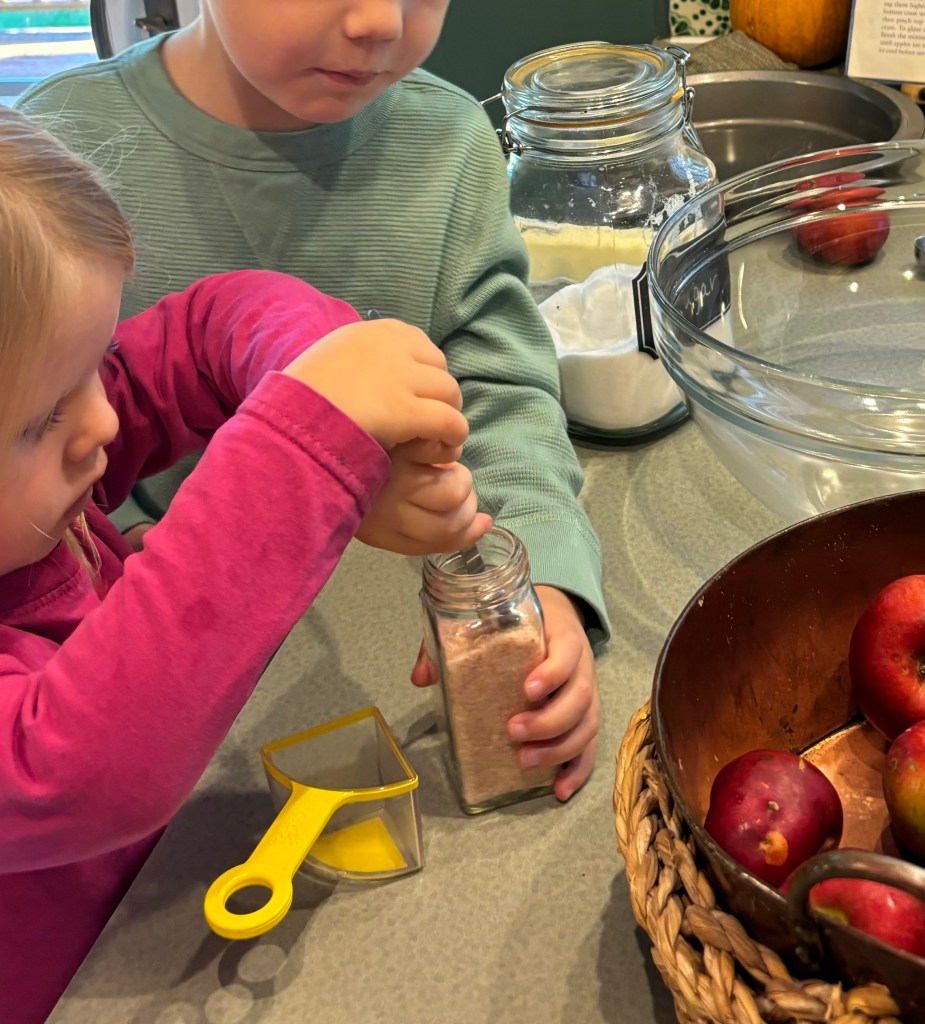
Mindset Shift #2: Start young. They are immediately ready to join us in the kitchen. A newborn baby is a lovely kitchen companion who is always down for a chat provided they are awake and happy. We can chat about what we’re doing, or simply invite them to lay close by and watch. Both of my children spent much time laying on our counter while I prepared our family meals and chatted about the process, or life.
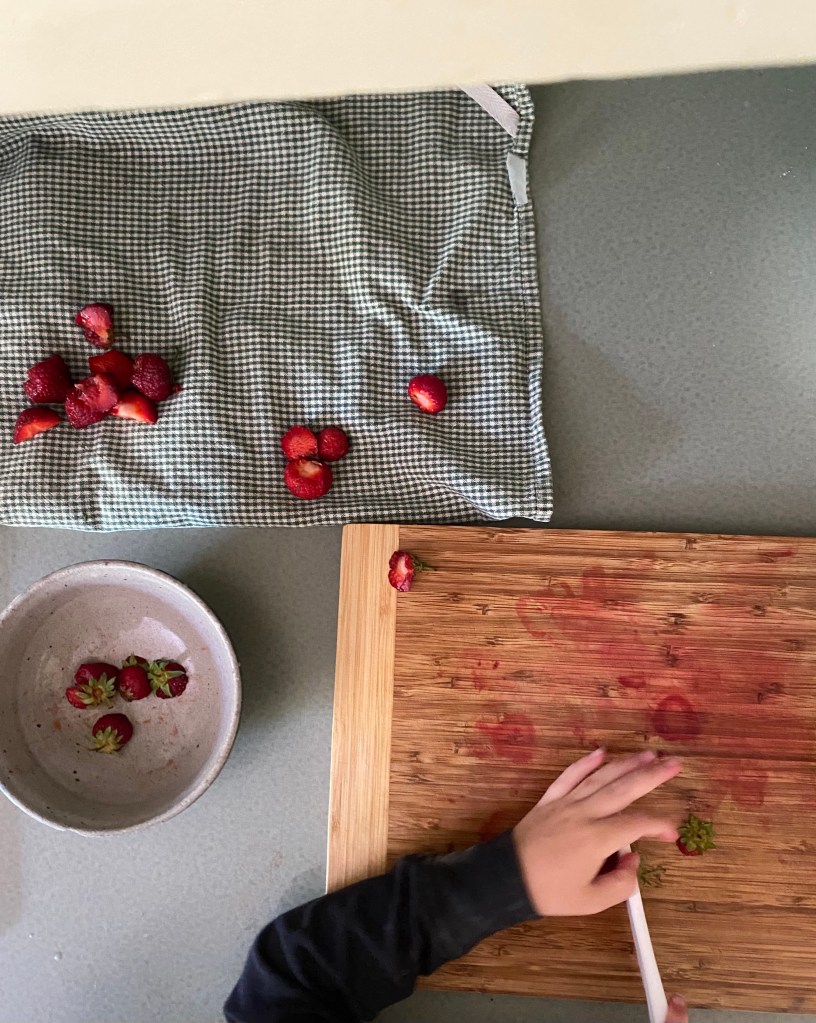
Mindset Shift #3: Messes are to be expected. Once you are able to embrace this one and accept the mess, the better off everyone will be. A re-frame works well here for me. Instead of looking around the kitchen and getting in a huff about the mess thinking “what a mess we’ve made”, I prefer to think “look at all the fun we’ve had”. The spilled flour represents a valiant effort from a little hand pouring a full cup of flour. Every mess is a symbol of effort and therefore growth.
Mindset Shift #4: Mind their speed. Young children need us to respect their speed, which is obviously much slower than our own. I expect kitchen tasks with children to take roughly 2x – 100x more time than if I were flying solo. So if it takes 15 minutes to cut through a handful of carrots for snack, so be it. Now, there are times when we need whip up a quick meal and feed the family because it’s 4:30 and everyone is hungry. These are times to prioritize expediency, and probably not the best time to invite little ones into the process unless they can manage a task independently. Children often value the process over product, so wait for a time in which you can take it slow without feeling rushed. We are at our best together when we can be fully present.
Environment
Mise in Place. This translates into “everything in it’s place”. French chefs use this method to ensure efficiency. We use this method to avoid the chaos that is realizing you are missing an ingredient and need to make a full stop or needing to walk across the kitchen to get another ingredient while your little sits precariously on the counter. both of which have led to tears and unnecessary stress for us, by the way. Instead, we Ingredients are collected, laid out, and prepped in advance of the cooking process. No less tears and stress, more opportunity to be fully present.
Child-sized tools. Montessori philosophy holds a special place in my heart when I design our homeschool, mainly because I love the respect (rightfully) given to children. Child-sized, real tools are a sign of respect. They enable our children to work alongside us while respecting they are developmentally different. My children boast about their tools because child-sized tools provide them with the opportunity needed to build confidence and self-esteem.
Little that is needed to invite our children in the kitchen. You probably have many items suitable for children in your kitchen right now. A soup spoon can be used for mixing. You likely have a small bowl suitable for tiny hands. Anyway, I’ve divided the kitchen tools I feel are our childrens’ go-to tools, and those that are less necessary but still fun and also broaden accessibility.
Go-to Kitchen Tools
- stool- the unsung hero of the kitchen. A kitchen chair is also helpful if you don’t have the longstanding space to accommodate a stool in your kitchen area.
- child knives. Our personal favorite tool. We started with this small knife for the toddler stage. Toddlers can cut through a banana for snack time with ease. Once our youngest had mastered this knife, we moved on to these knives. For a little over $3 a knife, it’s a bargain. They continue to be used daily and are well-loved by our children.
- cutting board
- small unbreakable bowls
- small whisk
- mixing spoons
- turner
- batter spatula
- hand blender
Fun and broaden accessibility
- apron
- apple peeler / corer
- hand to mind measuring cups – we’ve loved these as a nice visual to further explore fractions
Children’s cookbook We’ve very much enjoyed the Kids’ Fun and Healthy Cookbook. My 4 year old has had a great time making date muffins, mango ice cream, and trying out a flapjack recipe. The recipes are relatively healthy- they still use refined sugar, but very little- and have a modest number of steps. Plenty of visuals help prereaders follow along with some autonomy. I also appreciate some well chosen symbols to signify when adult help is needed. It’s a wonderful book created by adults who clearly have children in mind.
All in all, opening the kitchen door and inviting your youngsters along on the ride can be made simpler and more accessible with some minor tweaks. Begin with yourself and practice building the mental capacity required to patiently provide support by coming from a place of understanding and a willingness to adjust your expectations as needed. In addition, give some thought to the environment, considering how you might be able to make small changes to the process or the tools provided to ensure as smooth a sail as possible. These are the moments worth investing our thought in in this wild and precious life.



 thiswildandpreciouslife.com
Leave a comment