
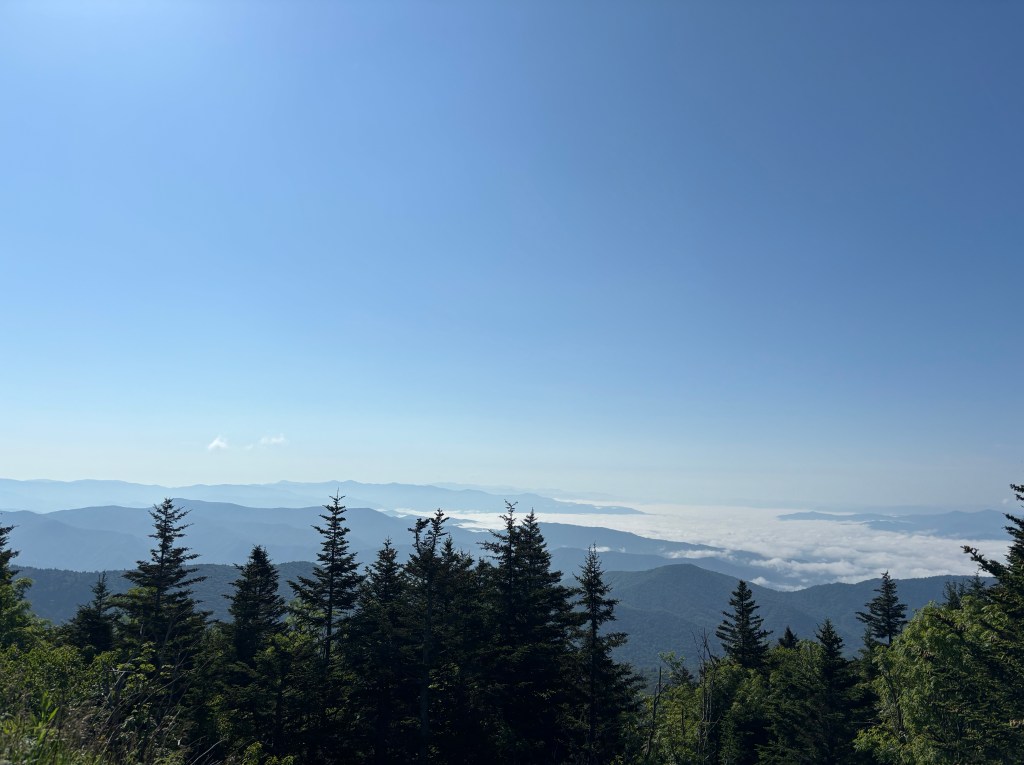
Let me start by saying that simply being in the Great Smoky Mountain National Park is educational. With so much to explore, the park is a natural wonder and lends itself to countless educational opportunities. That being said, when we took our recent trip to the Smokies to visit my beloved sister, I knew I wanted to bring a greater level of intention to our trip to foster more awareness and appreciation for our surroundings.
The best thing you can do to learn from the Smoky Mountains is to be present. Classified as a temperate rain forest, the Great Smoky Mountains is renowned for its exceptional biodiversity and is home to more documented species than any other US national park.
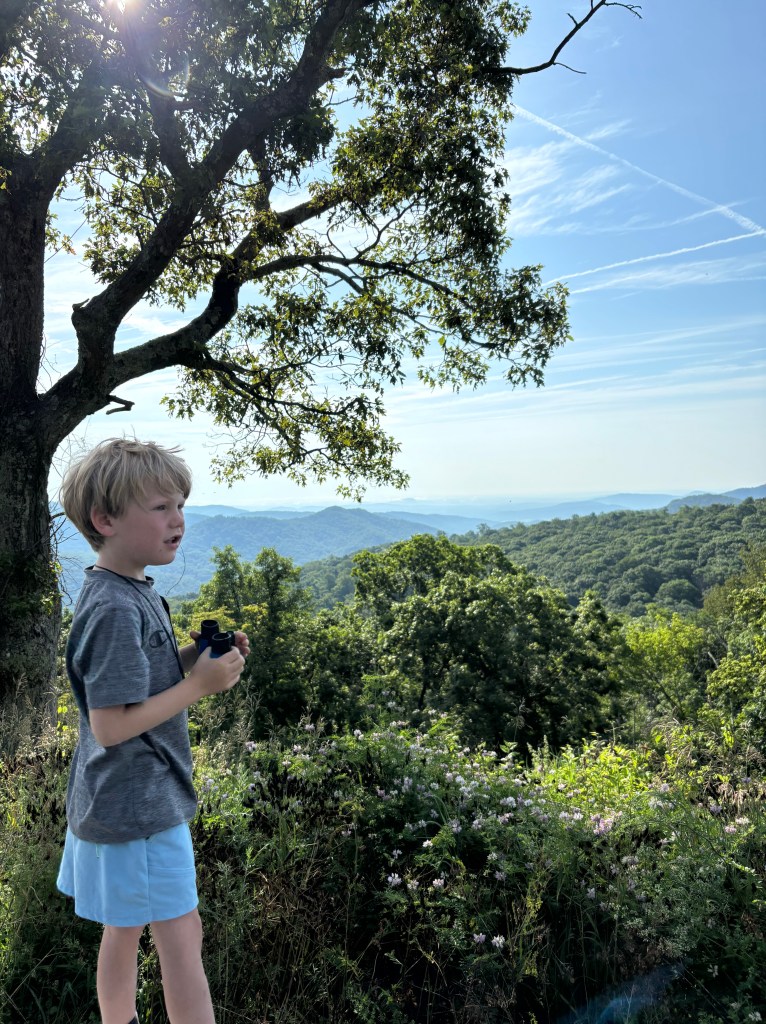
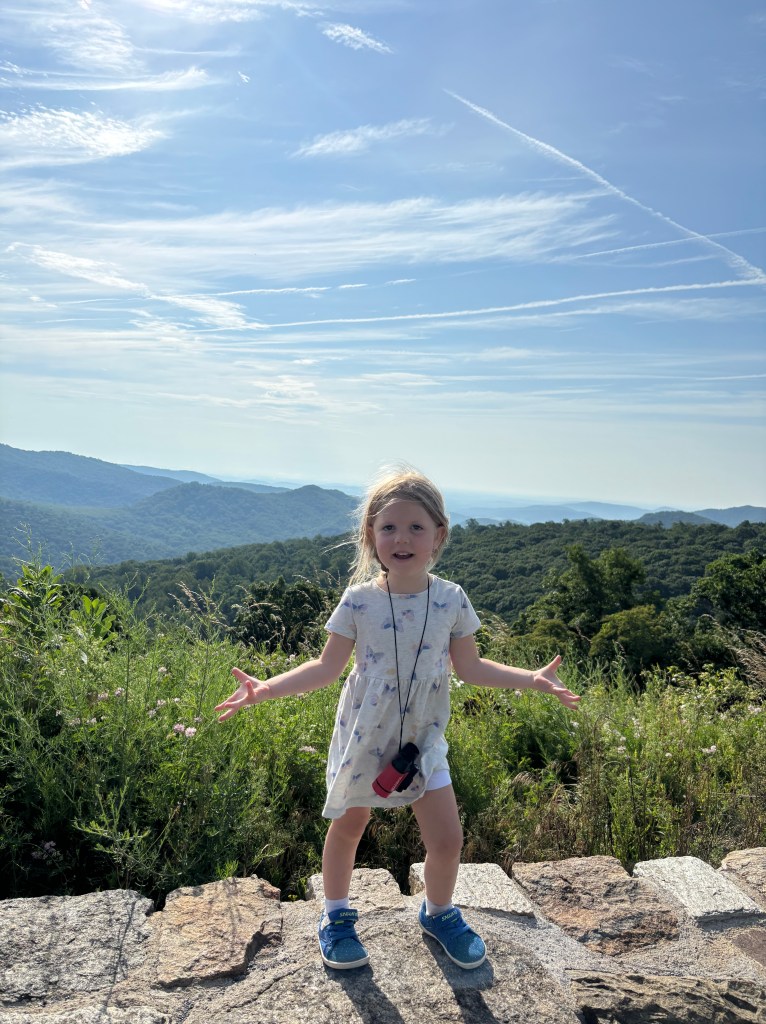
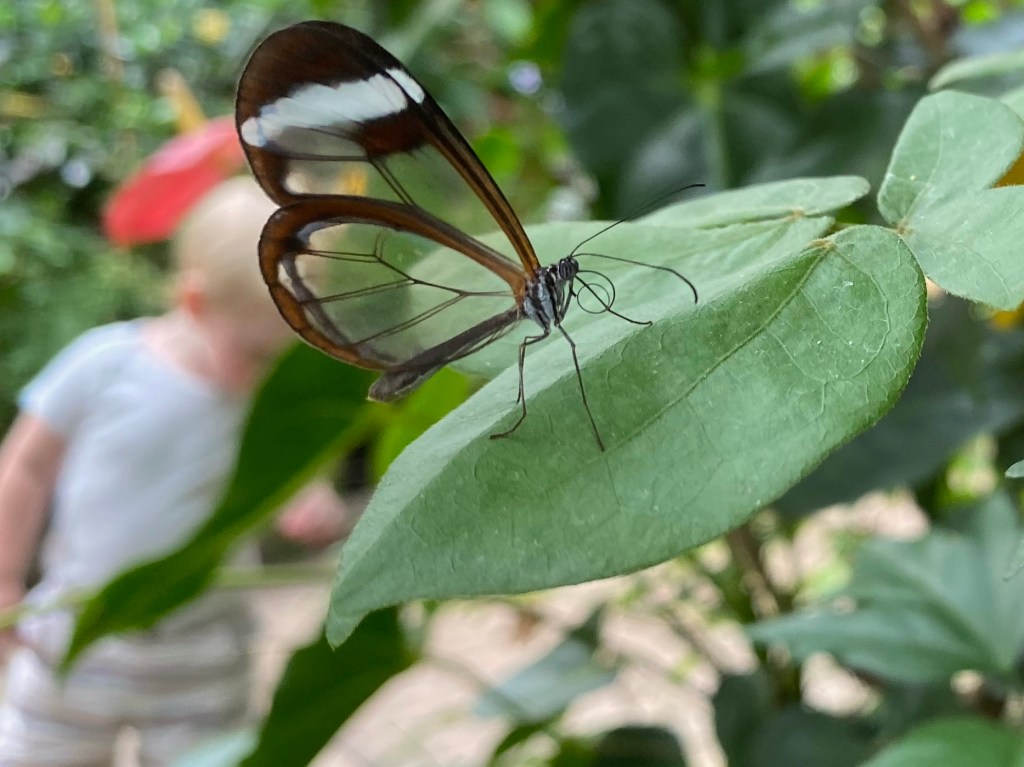
We hiked several easy trails surrounded by green plants and animals. On our adventures, we discovered new-to-us butterflies, insects, and interesting plants. Luckily, we had our butterfly ID brochures from our Magic Wings visit to identify the beautiful blue swallowtails that followed us. We took breaks to relax and enjoy the scenery. One of my favorite moments was resting on the Appalachian Trail while watching the kids hopping from rock to rock. They enjoyed splashing in the streams, looking at whirlpools, and collecting rocks. We admired the wide views and the unique “blue smoke” that gives the park its name. These experiences inspire imagination more than any planned activity. I suggest starting here and then sprinkling in learning opportunities as well.
Here’s a list of our richest learning adventures. .
Speak with a park ranger at a visitor center.
After you’ve let nature be your guide, let a park ranger be your second best guide. We stopped at the Sugarlands visitor center where there are rangers available to answer questions, give recommendations, and chat passionately about the park. Park rangers are invaluable educational resources, and some of the most amazing people I’ve met.
Our family visited the Sugarlands visitor center to speak with a park ranger on the wings of the Junior Ranger Program. During our chat, the children asked thoughtful questions they’d pondered including how to identify a mysterious “bubbly” substance on plants near Kuwohi’s peak. Spoiler alert: it is a protective layer used by frog hopper nymphs while they feed on plant sap. We could have easily pulled out our phones and used the internet, but we let the question stew in their minds. We considered possibilities together. We hypothesized. We imagined. Then we took our question to a park ranger. This was a more enlightening opportunity as actually speaking with an expert in the field is miles above a quick google search. Bonus: the park ranger pulled out an actual book (gasp). Let’s not forget in our technology saturated society that humans wo are devoted to their work are amazing resources too!
Earn a junior ranger badge.
The aforementioned Junior Ranger Program is an excellent opportunity for kids at National and State Parks. It’s a guide to thinking scientifically and learning about the park’s history and culture. A booklet picked up at a visitor center or can be purchased online at the Junior Ranger Program’s site, includes fun activities, invitations, and suggestions. We opted to get one for each of our kids as a keepsake.
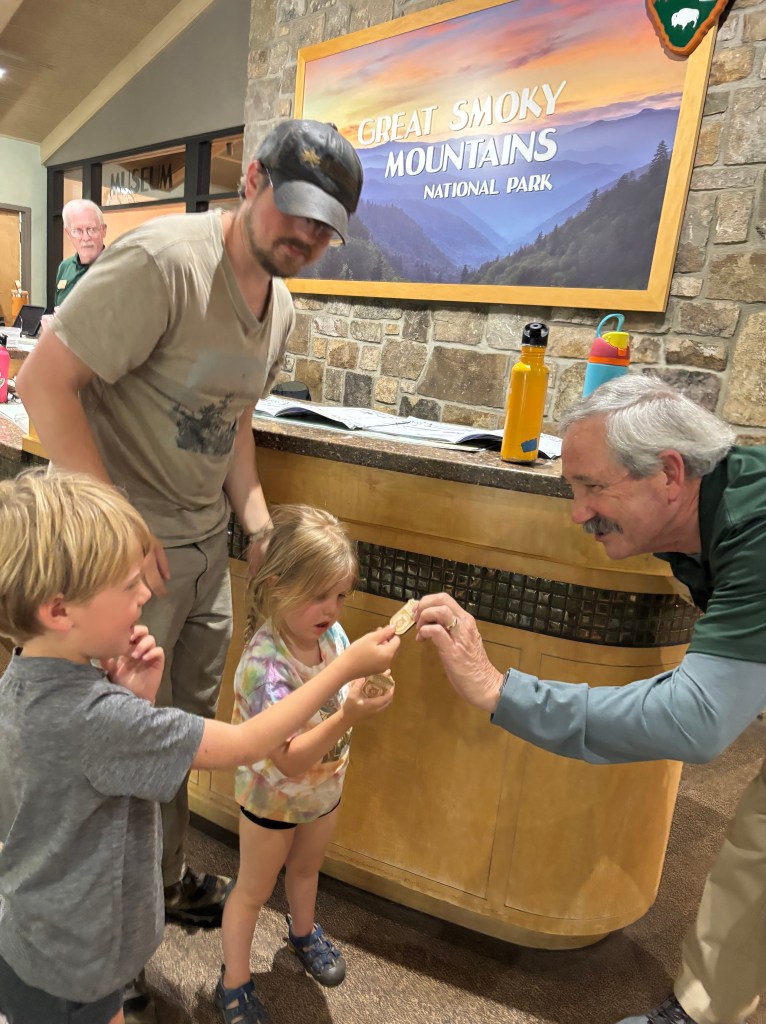
Once a variety of activities and experiences are finished, kids can become junior rangers and receive a special badge. These activities are designed to let kids explore through fun experiences while learning about history and culture.
Chat with Fellow Travelers
Yep, you heard that right. As a child of the 90’s, I was steeped in “stranger danger. While it’s wise to practice safety, I don’t think we are in danger by simply talking with fellow travelers. In fact, communication is a soft skill we value in our homeschool. I want our kids to be able to engage with and learn from other people.
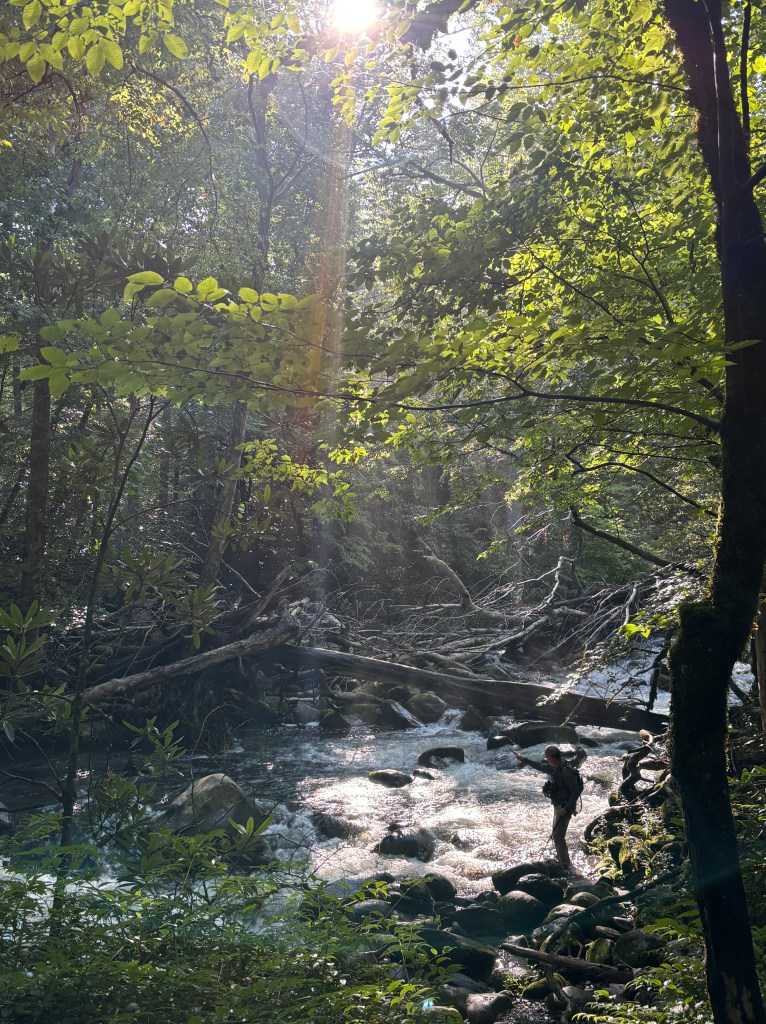
One of the best parts of our trip was chatting to a local fisherman who, coincidentally, caught a rainbow trout just a few moments into our conversation- talk about a “catch” of the day! He proudly showed the kids the rainbow trout. Then we went on to share about the rivalry between the non-native rainbow trout and the native brook trout. The non-native rainbow out compete with the native brook trout, pushing the brook trout upstream. The kids asked why the trout couldn’t live together, leading to a wonderful discussion about limited natural resources and competition. These organic learning experiences that come from being in the community with others truly warm my heart.
Read
We pregame for trips with tall stacks of books to build anticipation and set the context for learning. A couple quick searches online can yield great ideas about a given topic or location. Here are some of the books we enjoyed. You can pick out great children’s books while also supporting the park by heading to the Smokies Life site.
Ripley’s Aquarium
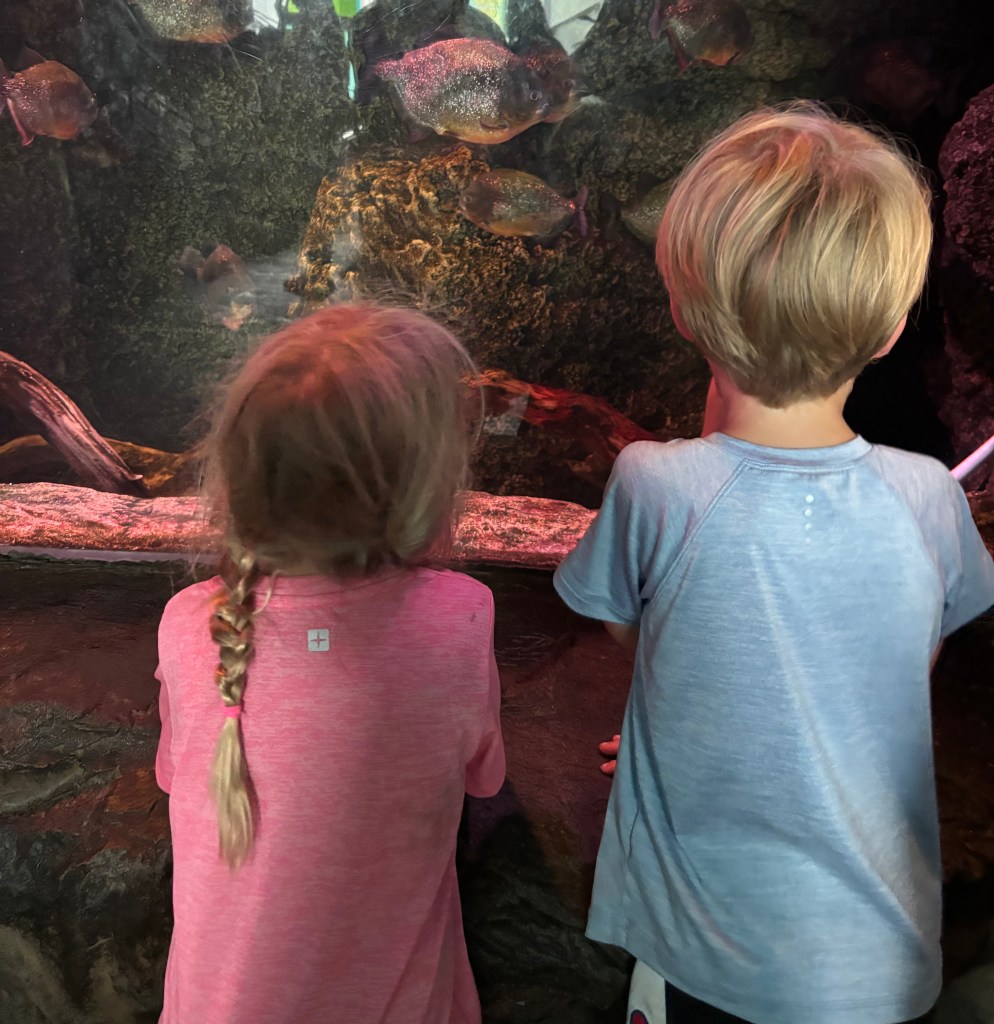
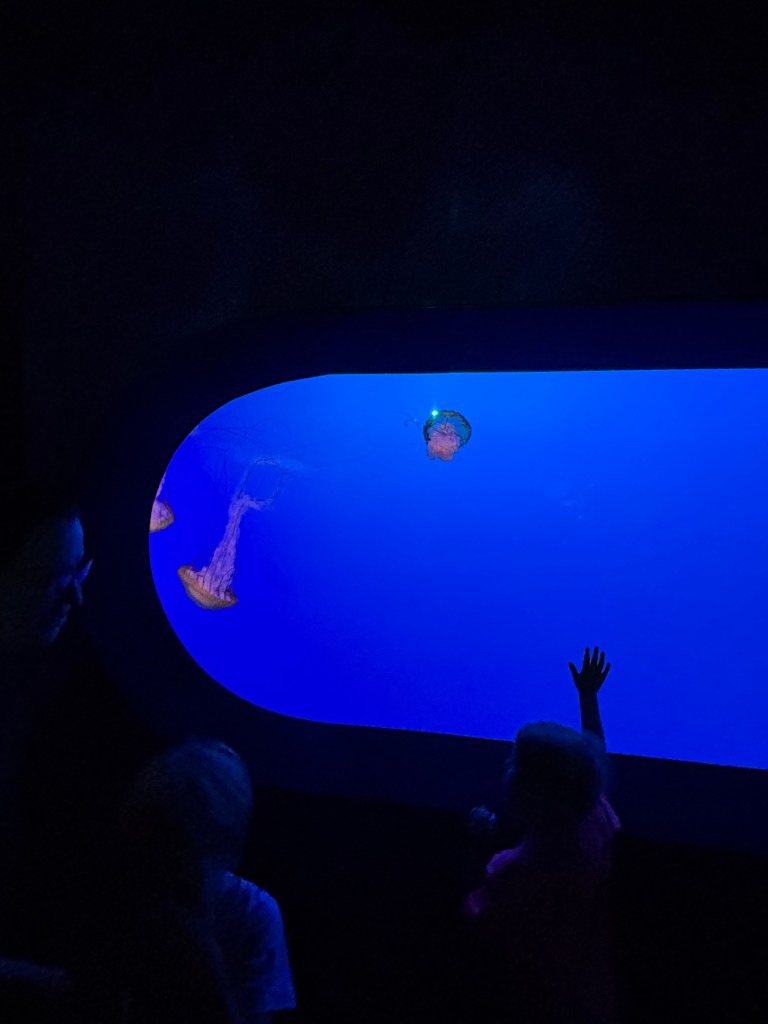
The Ripley’s Aquarium in downtown Gatlinburg is a treasure trove of learning and exploration. Organized by geographic location, it’s fun to meander through the aquarium while comparing to a map. For our children, aged 3 and 5, it was mostly about letting the novel nature and beauty of the variable sea creatures act as the guide. For older kids, it’s an excellent way to explore adaptations. and compare the creatures to their habitats around the globe given it’s clever organization and layout. The aquarium offers a couple hands on experiences- touch a jelly fish and a sting ray, if you so choose.

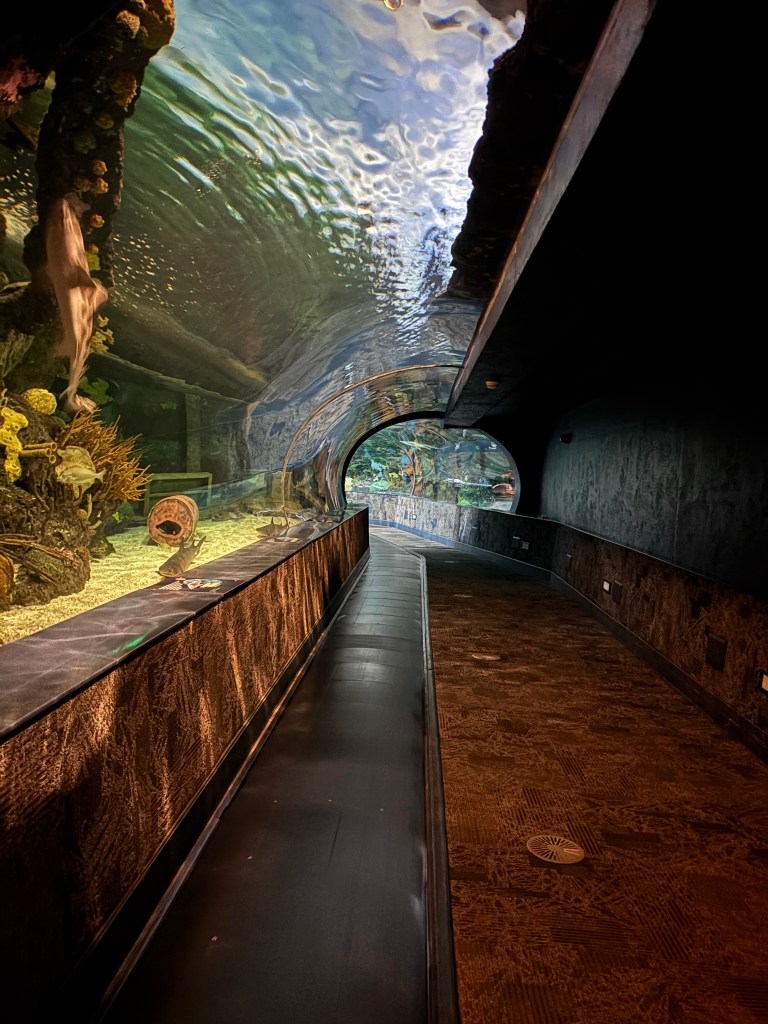
The tunnel was a favorite for everyone. We enjoyed an extensive tunnel where sharks, schools of fish, and sea turtles swam beside and above us. The conveyor belt walkway was like an ultimate lazy river experience, letting us take in the scenery without worrying about children darting off in every which direction. Aurora was smitten with the sea turtles, and learned the collective noun for fish saying “Look at that school of fish!” So sweet. Sage was fascinated by a small toothed sawfish shark. There were many opportunities to see the shark up close, adhered to the glass, getting an up-close and personal view of gills in action. This sparked his curiosity about gills and led to a gills scavenger hunt for the rest of our trip.
Learn about Early Settlers
There are many cemeteries throughout the park near the original homestead, most of which can be found on Cades Cove and along the Roaring Fork. The homesteads and cemeteries are an opportunity to step back in time and learn about the settlers in the Smokies before they became a National Park. The Smoky Mountain National Park is the only national park free to enter. We learned from a park ranger that settlers wanted to visit their familial homesteads and cemeteries, sans fee. Before transferring their land to the National Park Service, they requested the park be free to all. Interesting tidbit, I’d say!
Along the Baskins Creek Trail we found a very old cemetery. While some of the stones belonged to the last couple generations, the cemetery had many stones that were just that- stones stuck into the ground without modern carving techniques. We explored the dates on some of the stones and made guesses about how old we thought the oldest stones were. “millions of years” was clearly not an accurate response, but the sentiment that they were older was there and entirely valid. Also cute!
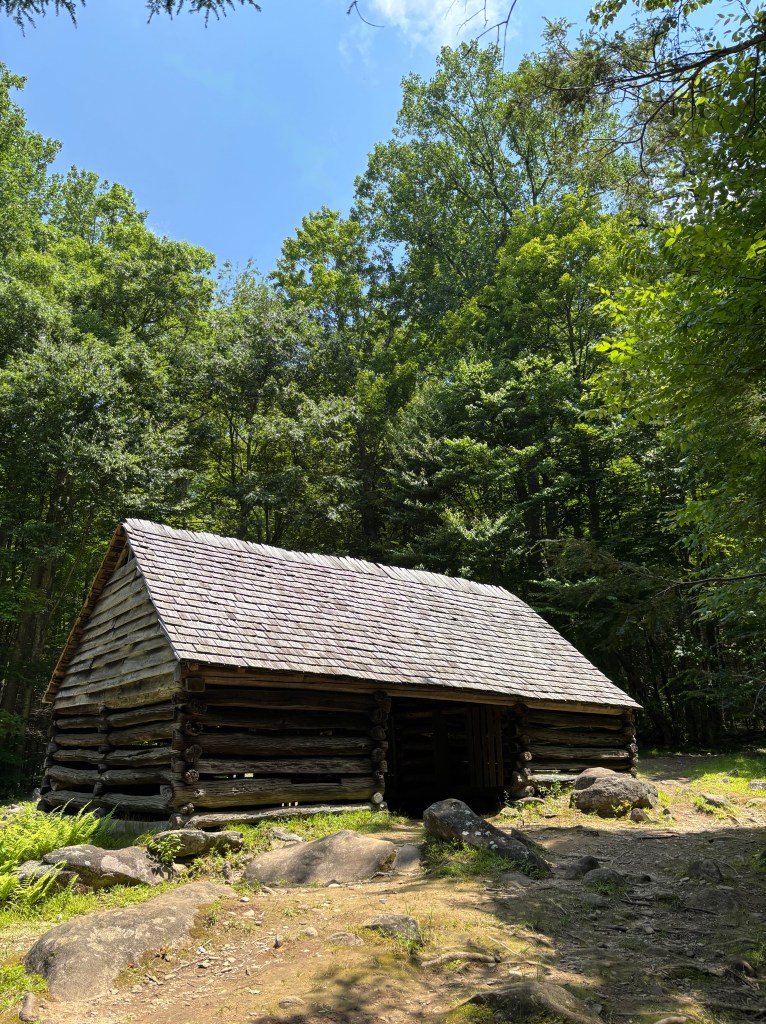
While Sage and Aurora were tuckered out from a hike and stayed with my husband, my sister and I ventured on to explore a homestead on the Roaring Fork road. I can see us prioritizing a visit to the homesteads on a return trip. The buildings, which included homes, coops, and livestock outbuildings, were very well preserved. Open to exploration, you can walk through the houses. Inside, you’ll find creaky floors, low ceilings, and modest layouts. Outside you’ll find interesting fencing and a layout arranged around rivers. Inside the outbuildings, you’ll get a glimpse into how they kept livestock with hollowed out trees which served as troughs. It felt like stepping back in time. A wonderful location to make observations and inferences about settlers’ lifestyles.
Side note: On a future visit, we’ll spend more time learning about the Cherokee and visiting the North Carolina part of the park, including the Cherokee museum. While we loved the ability to explore settlements, it felt like the original land inhabitants of the Smokies, the Cherokee, were largely left out in the part of the park we explored. Next time we’ll be sure to explore the North Carolina side for a clearer picture of the areas’ history.
Sugarlands Visitor Center
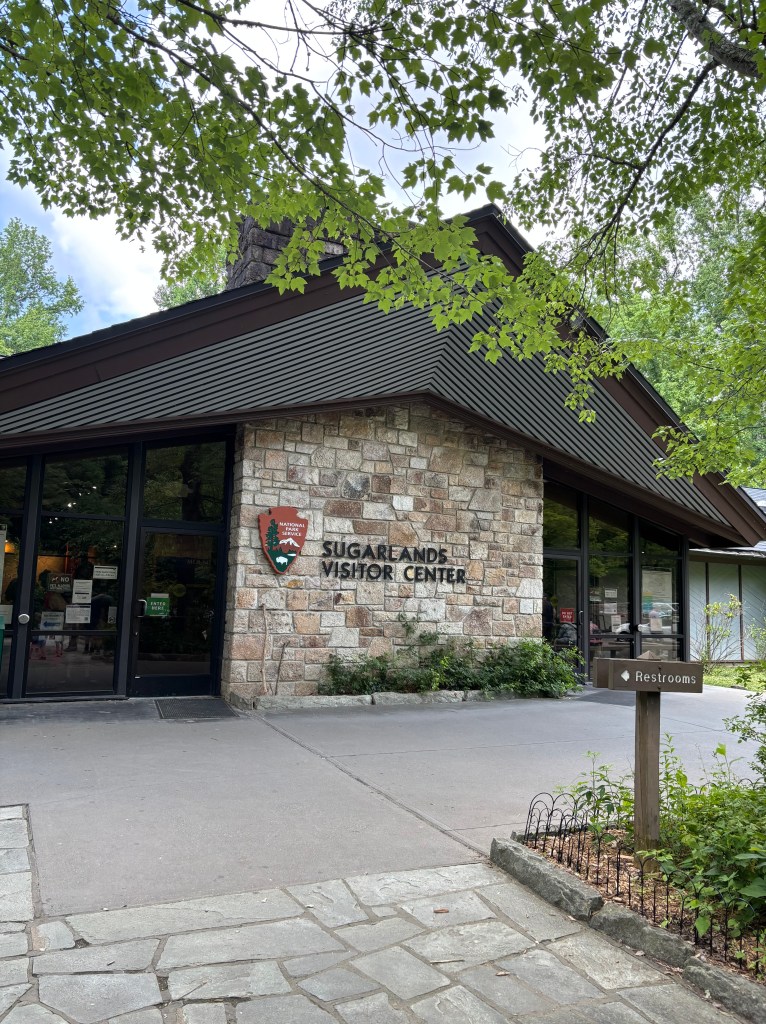
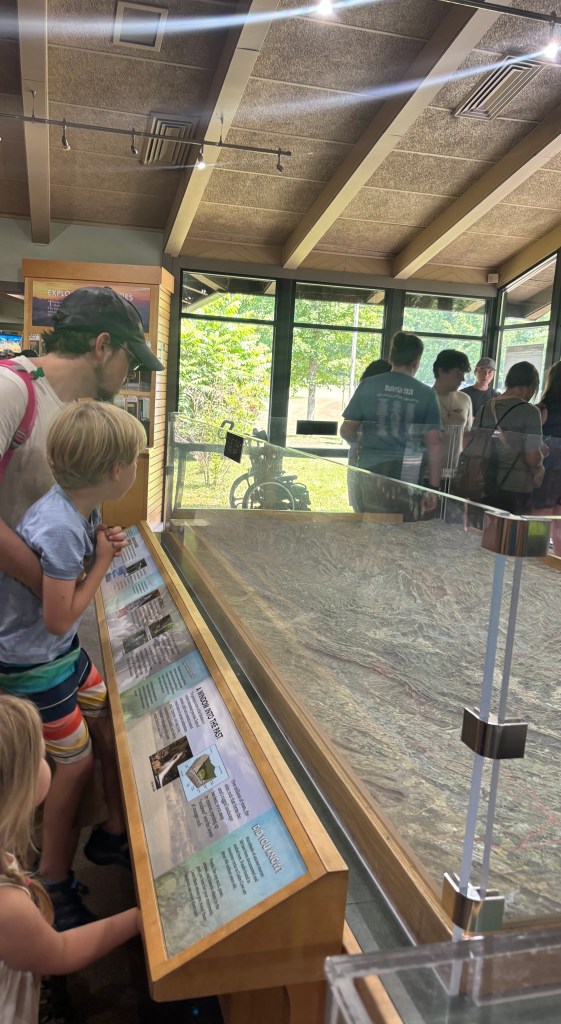
Visitor centers are one of the best ways to learn things you never knew you never knew. That’s right. Here is where you will find rangers ready to answer questions, guides and ID brochures, topographic maps, and taxodermy or models of local flora and fauna.
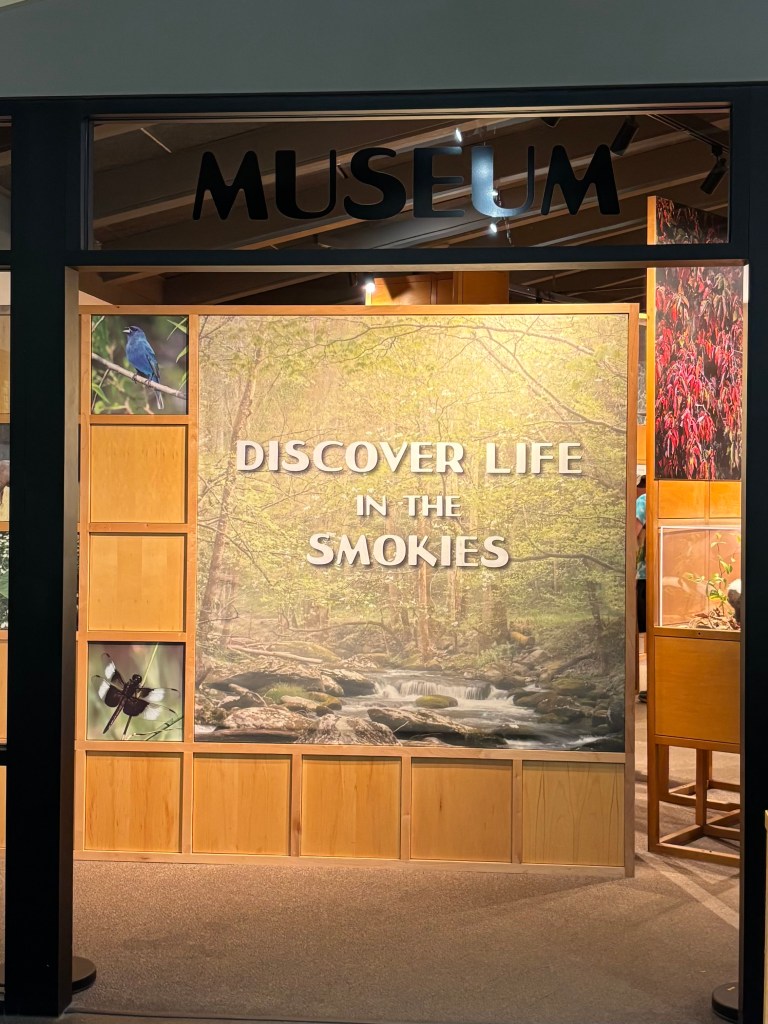
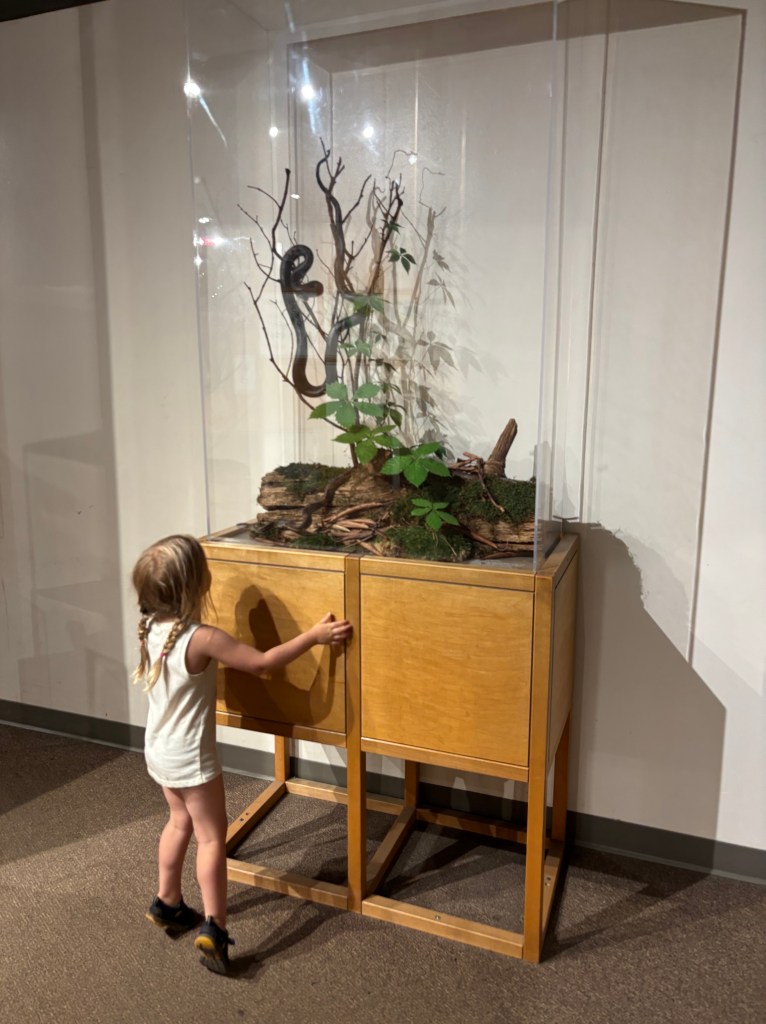
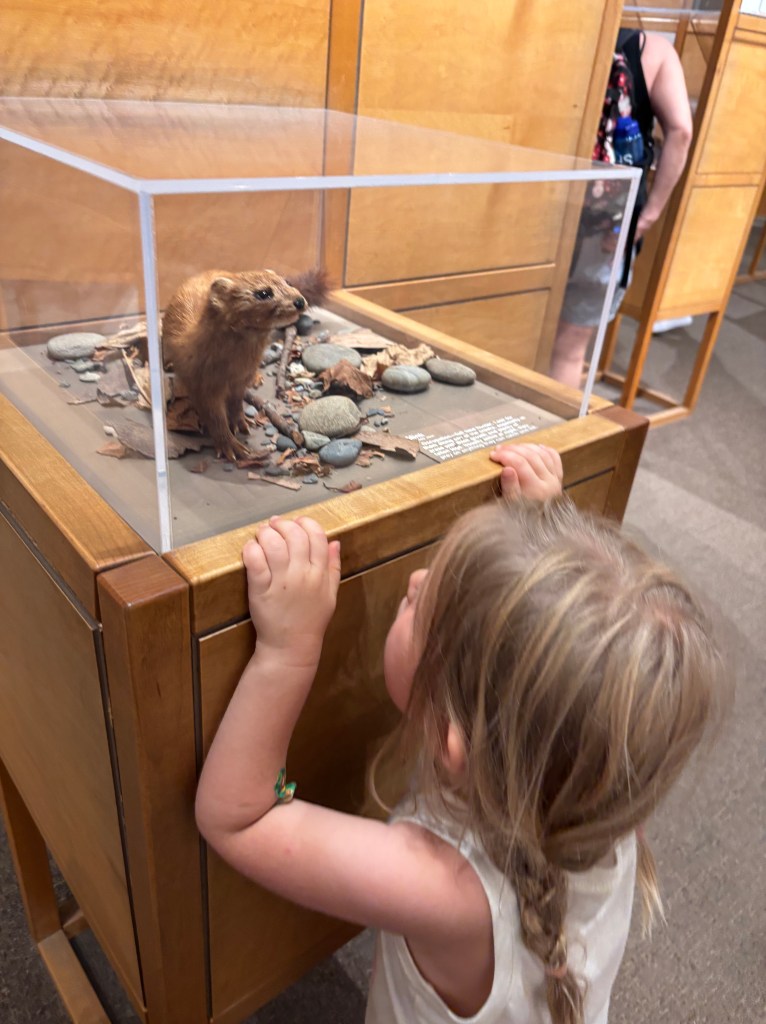
While at Sugarlands, we checked out all the above. We walked through the wildlife section post hikes, which made it extra special because we identified species we’d found on our adventures. “We saw these” was called out as they made connections to their experiences in the park. In addition, we learned about plant and animal species we’d seen and give them a proper name. For us, many of the species in the Smokies are a reflection of the species we find in New England. As a result, it was fun to compare and contrast, as well as to talk about the adaptations needed for both biomes. Talk about connections!
There is no shortage of learning opportunities in the Smokies. From a large biodiversity to view, to a rich preserved (settlers) history to explore, and plenty of experts available as guides, you will assuredly learn from a trip to the Smoky Mountains. With some intention, you can ensure these rich learning experiences will be remembered for years, and perhaps even a lifetime. I highly suggest making core memories in this beautiful landscape.
Read more: Rich Learning Experiences in the Great Smoky Mountains
 thiswildandpreciouslife.com
Leave a comment